

Digital Forensics, BS
Prepare for a role at the forefront of digital investigations, where science and law converge. Use state-of-the-art tools to analyze cybercrime evidence, building practical skills to address real-world challenges. You'll be well positioned for a challenging career in cybersecurity, where your expertise contributes to meaningful solutions.
Quick facts

Locations


Courses

Additional facts
STEM-OPT extension eligible: Yes
International students (F1) can extend U.S. work experience by 24 months.
Accreditation
Accredited by the Higher Learning Commission.


Degree description
Digital Forensics degree description
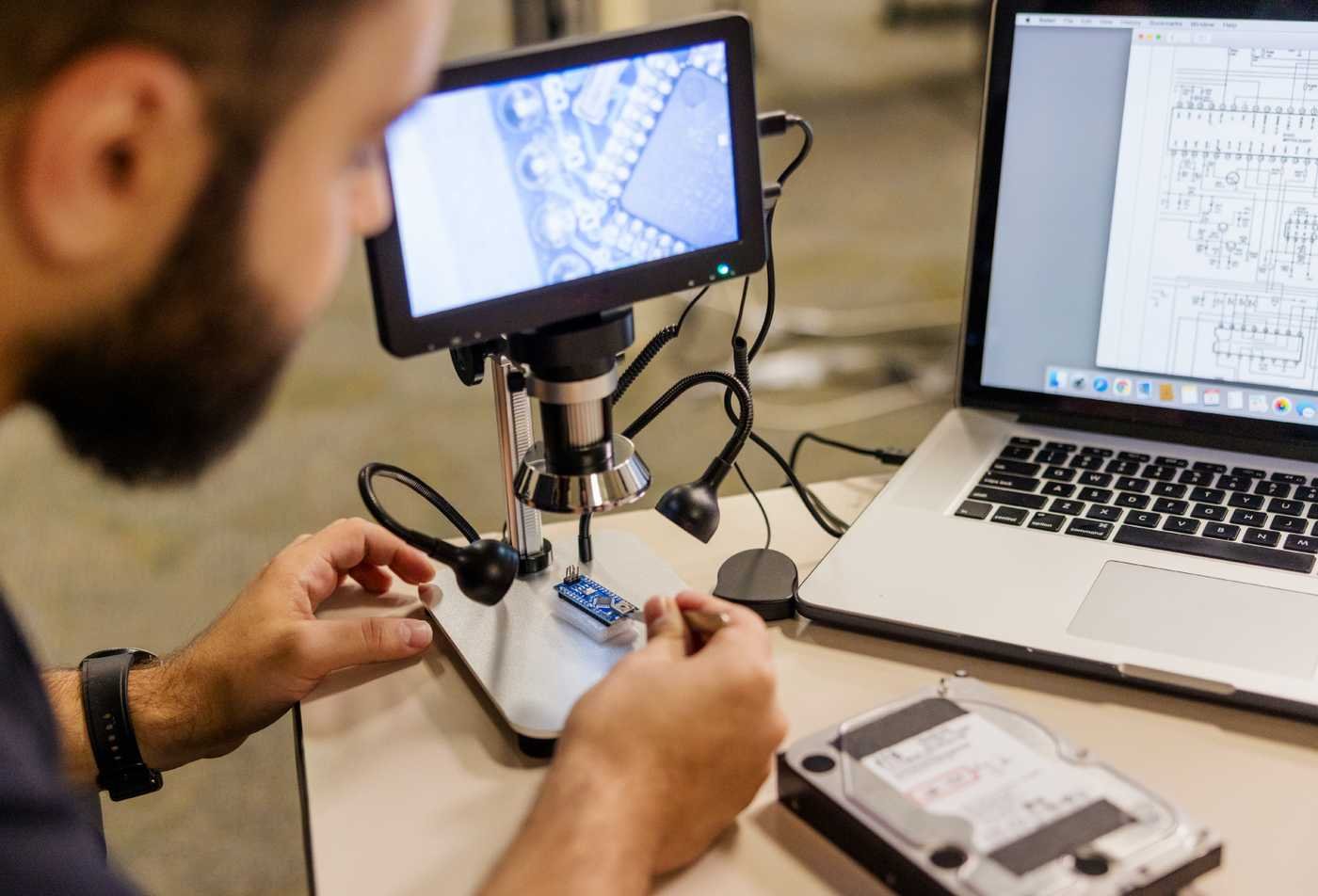
Digital forensics is the discipline that employs data generated and stored on computers, mobile devices, networks and cloud environments to systematically collect, analyze and preserve evidence related to crimes or incidents. Using this process, professionals help determine the causes of crimes and provide reliable evidence for court proceedings.
The Bachelor of Science program in digital forensics provides a comprehensive curriculum that equips you with the specialized skills and legal knowledge required for collecting and analyzing digital evidence. By integrating diverse fields such as digital forensics and cybersecurity, the program prepares you to effectively address the complex challenges of cybercrime and digital misconduct.
You engage in hands-on learning activities --- including laboratory exercises, internships and field experiences based on authentic cases --- to systematically master state-of-the-art software and analytical techniques, strengthening both your theoretical understanding and practical expertise. Active faculty research and strategic industry partnerships expose you to innovative technological trends and security issues, enabling you to thrive as a professional in the rapidly evolving digital landscape.
Why study digital forensics at ASU?
In this program, you can take your learning beyond the classroom through experiences that build technical expertise and professional skills. You have the option to participate in the New College Undergraduate Inquiry and Research Experiences, working alongside faculty on research that deepens your knowledge and supports your career goals.
Courses
Explore a sample list of courses you may take in this program.
| Sample courses |
|---|
| DIF 101 Introduction to Information Security |
| DIF 201 Digital Forensics |
| DIF 401 Advanced Digital Forensics |
| ACO 330 Computer Networks |
| ACO 201 Data Structures and Algorithms |
| ACO 331 Network Forensics Analysis |

Course checksheet and curriculum archive
The curriculum checksheet displays this program's required courses and other requirements you must complete for graduation.
Current ASU students, see how your courses can apply to another major and find out how to change your major (opens in new window).


Already completed some college courses? Build on your success.
If you earned college credit outside ASU, our transfer tools map out your progress towards a degree and help you plan next steps.
See how your credits may apply (opens in new window)What you'll learn
The following learning outcomes highlight some of the knowledge and skills you'll develop to support your future success.
- Apply core forensic methodologies and information security principles to the preservation of digital evidence in investigative scenarios.
- Implement scripts and tools to optimize forensic workflows and automate data analysis by leveraging computational thinking and programming expertise.
- Analyze cybersecurity incidents across complex technological environments, including cloud, mobile, and IoT systems.
 Apply core forensic methodologies and information security principles to the preservation of digital evidence in investigative scenarios.
 Admission requirements
Here are the admission and application details
All students are required to meet general university admission requirements.
First year (opens in new window) | Transfer (opens in new window) | International (opens in new window) | Readmission (opens in new window)
A current ASU student has no additional requirements for changing majors.
Students should visit the Change of Major form (opens in new window) for information about how to change a major to this program.
Explore expanded study opportunities
When you pursue concurrent degrees (also known as a “double major”), you earn two distinct degrees and receive two diplomas. Working with your academic advisor, you can create your own concurrent degree combination. Some combinations are not possible due to high levels of overlap in curriculum.
With more than 300 Global Education program opportunities available to them, students in the digital forensics program are able to tailor their experience to their specific interests and skill sets. Students in these programs build communication skills, learn to adapt and persevere, and are exposed to research and internships across the world, increasing their professional network. Participation in a study abroad program provides students with the heightened cultural competency and strengthened leadership and critical thinking skills that enhance their resumes and help them stand out in a competitive career field. Whether in a foreign country, in the U.S. or online, students in the New College of Interdisciplinary Arts and Sciences can explore how their varied fields and interests interact in different settings around the world.


Paying for college
Use our calculator to estimate your full-time or part-time tuition fees for this program prior to any financial aid. Keep in mind that most of our students receive financial aid, which can reduce out-of-pocket costs.
Get an estimate


Build the career and future you want
Our graduates are prepared for a variety of career paths, including:
| Career | Growth | Median Salary | More Information |
|---|---|---|---|
| Computer Network Administrator | -4.1% | $99,130 | Learn more |
| Computer Network Technician | 1.2% | $76,220 | Learn more |
| Computer Science Professor | 4.9% | $96,980 | Learn more |
| Computer Systems Analyst | 7.9% | $105,850 | Learn more |
| Crime Scene Investigator | 13.3% | $72,060 | Learn more |
| Digital Forensics Analyst | 5.1% | $116,580 | Learn more |
| Information Security Analyst | 21.0% | $129,180 | Learn more |
| Information Security Engineer | 5.1% | $116,580 | Learn more |
| Intelligence Officer | 0.2% | $93,790 | Learn more |
| Penetration Tester | 5.1% | $116,580 | Learn more |
Example job titles and salaries listed are not necessarily entry level, and students should take into consideration how years of experience and geographical location may affect pay scales. Some jobs also may require advanced degrees, certifications or state-specific licensure.
Data obtained from the Occupational Information Network (O*NET) under sponsorship of the U.S. Department of Labor/Employment and Training Administration (USDOL/ETA).
More about careers
Careers this digital forensics degree prepares you for
With the multidisciplinary skill set they have acquired --- spanning technical, legal and investigative domains --- graduates are prepared for fast-growing, emerging roles in digital investigations and cybercrime. The U.S. Bureau of Labor Statistics estimates that between 2024 and 2034, employment of one such role, information security analyst, will increase 29% --- a rate much greater than that for most occupations. Graduates of this program are prepared to work in government agencies and law enforcement, for consulting firms and on cybersecurity teams.
Contact information
Use the contact information below to get in touch if you're a current student or have general questions.
Prospective students should fill out the Request for Information form.
School of Interdisciplinary Forensics
|
FAB N101
SIFadvising@asu.edu
602-543-3000
Frequently asked questions about degree programs
Accelerated programs allow students the opportunity to expedite the completion of their degree.
Accelerated master's
These programs allow students to accelerate their studies to earn a bachelor's plus a master's degree in as few as five years (for some programs).
Each program has requirements students must meet to be eligible for consideration. Students typically receive approval to pursue the accelerated master's during the junior year of their bachelor's degree program. Interested students can learn about eligibility requirements and how to apply.
Concurrent degrees allow students to pursue their own personal or professional interests, earn two distinct degrees and receive two diplomas. To add a concurrent degree to your existing degree, work with your academic advisor.
Joint programs, or jointly conferred degrees, are offered by more than one college and provide opportunities for students to take advantage of the academic strengths of two academic units. Upon graduation, students are awarded one degree and one diploma conferred by two colleges.
ASU adds new programs to Degree Search frequently. Come back often and look for the "New Programs" option.
ASU Online offers programs in an entirely online format with multiple enrollment sessions throughout the year. See https://asuonline.asu.edu/ for more information.
