

Biology (Pharmacology/Toxicology), BS
Are you fascinated by how medicines and chemicals affect the body? Explore pharmacology and toxicology, fields that drive medical breakthroughs, while building the knowledge to contribute to safer treatments, drug development and healthier communities.
Quick facts

Locations


Courses

or MAT 251 Calculus for Life Sciences
Additional facts
STEM-OPT extension eligible: Yes
International students (F1) can extend U.S. work experience by 24 months.
Accreditation
Accredited by the Higher Learning Commission.


Degree description
Biology (Pharmacology/Toxicology) degree description
The pharmacology and toxicology concentration of the Bachelor of Science program in biology emphasizes the biochemical, molecular and physiological components of chemical and body interactions.
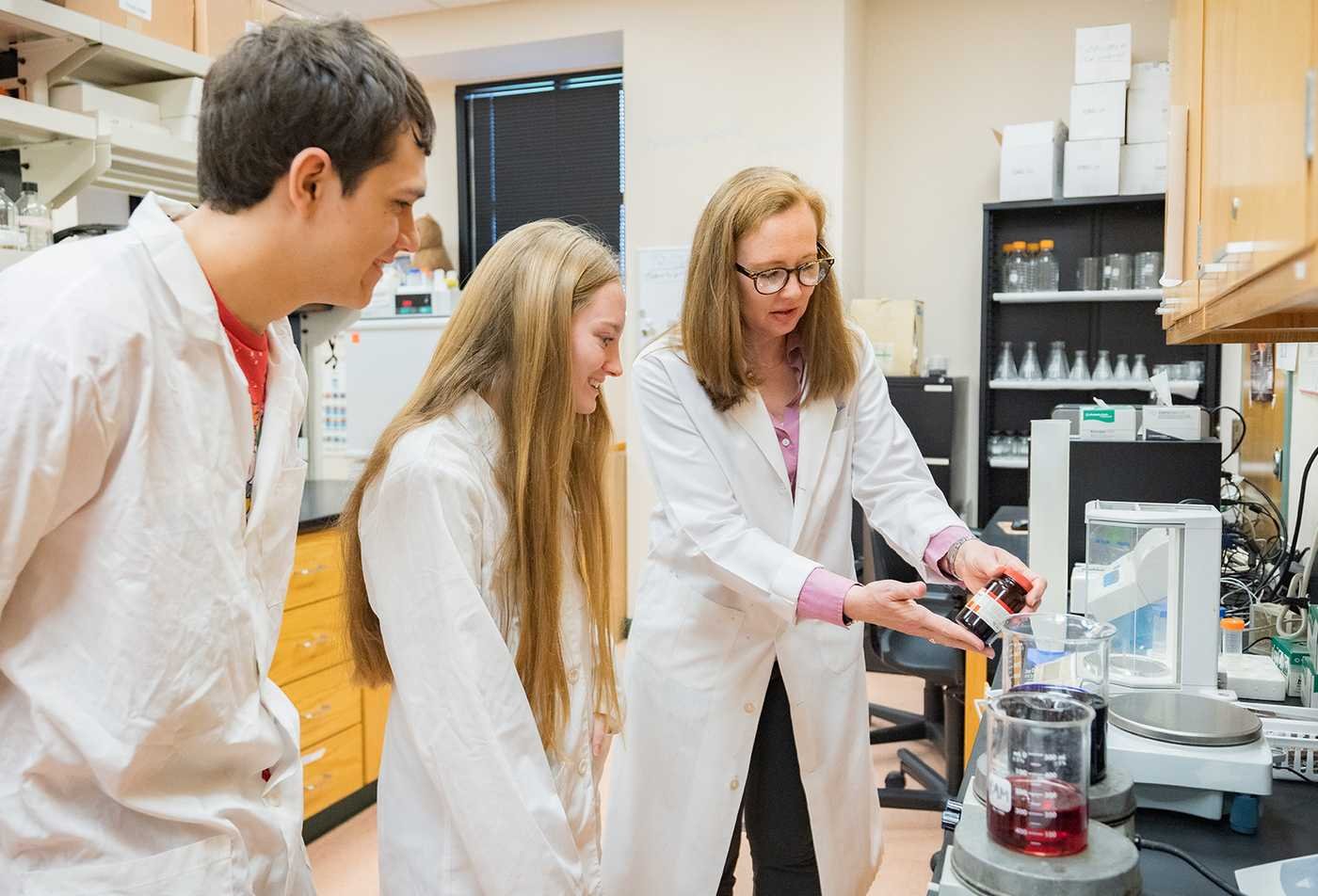
Experiential learning is a core component of the program, and all required core courses have laboratories. By learning in an integrative environment that emphasizes the interconnectedness of disciplines, you gain a deeper understanding of larger scientific concepts and can view these concepts from multiple perspectives. To have a thorough understanding of the interactions of chemicals in the biological system, you study biology and chemistry, and you become familiar with chemical interactions at physiological, molecular and cellular levels.
You have the opportunity to conduct independent research under the mentorship of faculty members or in internships outside the school.
Why specialize in pharmacology/toxicology at ASU?
You can get involved beyond the classroom through the Pre-Health Advising Dental-Pharmaceutical Club at the ASU West Valley campus, where you can connect with peers who share your interest in health and the pharmaceutical sciences.
Courses
Explore a sample list of courses you may take in this program.
| Sample courses |
|---|
| BIO 181 General Biology I |
| BIO 182 General Biology II |
| BIO 320 Fundamentals of Ecology |
| LSC 322 Fundamentals of Ecology Laboratory |
| BIO 353 Cell Biology |
| BIO 354 Cell Biology Laboratory |

Course checksheet and curriculum archive
The curriculum checksheet displays this program's required courses and other requirements you must complete for graduation.
Current ASU students, see how your courses can apply to another major and find out how to change your major (opens in new window).


Already completed some college courses? Build on your success.
If you earned college credit outside ASU, our transfer tools map out your progress towards a degree and help you plan next steps.
See how your credits may apply (opens in new window)Admission requirements
Here are the admission and application details
All students are required to meet general university admission requirements.
First year (opens in new window) | Transfer (opens in new window) | International (opens in new window) | Readmission (opens in new window)
A current ASU student has no additional requirements for changing majors.
Students should visit the Change of Major form (opens in new window) for information about how to change a major to this program.
Explore expanded study opportunities
This program allows you to obtain both a bachelor's and a master's degree in as little as five years. As a high-achieving student, accelerated bachelor's plus master's degree programs are designed for you to share undergraduate coursework with graduate coursework to accelerate completion of your master's degree. These programs feature the same high-quality curriculum taught by ASU's world-renowned faculty.
This program is offered as an accelerated bachelor's plus master's degree with:
Approval to pursue the accelerated master's is typically granted during the junior year of your bachelor's degree program. If you are interested, you can learn more about eligibility requirements and how to apply.
When you pursue concurrent degrees (also known as a “double major”), you earn two distinct degrees and receive two diplomas. Working with your academic advisor, you can create your own concurrent degree combination. Some combinations are not possible due to high levels of overlap in curriculum.
Studying abroad enables students in the biology program to expand their knowledge of how science impacts society through a variety of cultures.
With more than 300 Global Education program opportunities available to them, students are able to tailor their experience to their specific interests and skill sets. Students in these programs build communication skills, learn to adapt and persevere, and are exposed to research and internships across the world, increasing their professional network. Participation in study abroad programs provides students with the heightened cultural competency and strengthened leadership and critical thinking skills that enhance their resumes and help them stand out in a competitive career field. Whether in a foreign country, in the U.S. or online, students in the New College of Interdisciplinary Arts and Sciences can explore how their varied fields and interests interact in different settings around the world.


Paying for college
Use our calculator to estimate your full-time or part-time tuition fees for this program prior to any financial aid. Keep in mind that most of our students receive financial aid, which can reduce out-of-pocket costs.
Get an estimate


Build the career and future you want
Our graduates are prepared for a variety of career paths, including:
| Career | Growth | Median Salary | More Information |
|---|---|---|---|
| Biological Technician | 7.4% | $57,510 | Learn more |
| Climate Change Analyst | 6.1% | $82,220 | Learn more |
| Environmental Protection Specialist | 6.1% | $82,220 | Learn more |
| Environmental Specialist | 6.9% | $55,090 | Learn more |
| Family Practice Medical Doctor (FP MD) | 3.3% | $244,180 | Learn more |
| Industrial Ecologist | 6.1% | $82,220 | Learn more |
| Medical Doctor (MD) | 4.0% | $256,560 | Learn more |
| Medical Scientist | 12.6% | $103,410 | Learn more |
| Pharmacist | 5.2% | $140,910 | Learn more |
| Veterinarian (Vet) | 9.4% | $130,100 | Learn more |
Example job titles and salaries listed are not necessarily entry level, and students should take into consideration how years of experience and geographical location may affect pay scales. Some jobs also may require advanced degrees, certifications or state-specific licensure.
Data obtained from the Occupational Information Network (O*NET) under sponsorship of the U.S. Department of Labor/Employment and Training Administration (USDOL/ETA).
More about careers
Careers this pharmacology/toxicology concentration prepares you for
Graduates are prepared for occupations such as:
- laboratory researcher
- pharmacist
- physician
- physician assistant
- risk assessor
- veterinarian
They may work in governmental agencies or private companies in areas such as:
- clinical trials
- product safety evaluation
- regulatory affairs
- teaching
Graduates are also prepared for entry-level employment in the growing field of environmental toxicology and for graduate and professional programs in pharmacology and toxicology.
Contact information
Use the contact information below to get in touch if you're a current student or have general questions.
Prospective students should fill out the Request for Information form.
School of Mathematical and Natural Sciences
|
FAB N101
MNSadvising@asu.edu
602-543-3000
Frequently asked questions about degree programs
Accelerated programs allow students the opportunity to expedite the completion of their degree.
Accelerated master's
These programs allow students to accelerate their studies to earn a bachelor's plus a master's degree in as few as five years (for some programs).
Each program has requirements students must meet to be eligible for consideration. Students typically receive approval to pursue the accelerated master's during the junior year of their bachelor's degree program. Interested students can learn about eligibility requirements and how to apply.
Concurrent degrees allow students to pursue their own personal or professional interests, earn two distinct degrees and receive two diplomas. To add a concurrent degree to your existing degree, work with your academic advisor.
Joint programs, or jointly conferred degrees, are offered by more than one college and provide opportunities for students to take advantage of the academic strengths of two academic units. Upon graduation, students are awarded one degree and one diploma conferred by two colleges.
ASU adds new programs to Degree Search frequently. Come back often and look for the "New Programs" option.
ASU Online offers programs in an entirely online format with multiple enrollment sessions throughout the year. See https://asuonline.asu.edu/ for more information.
