

Engineering Science (Microelectronics), BS
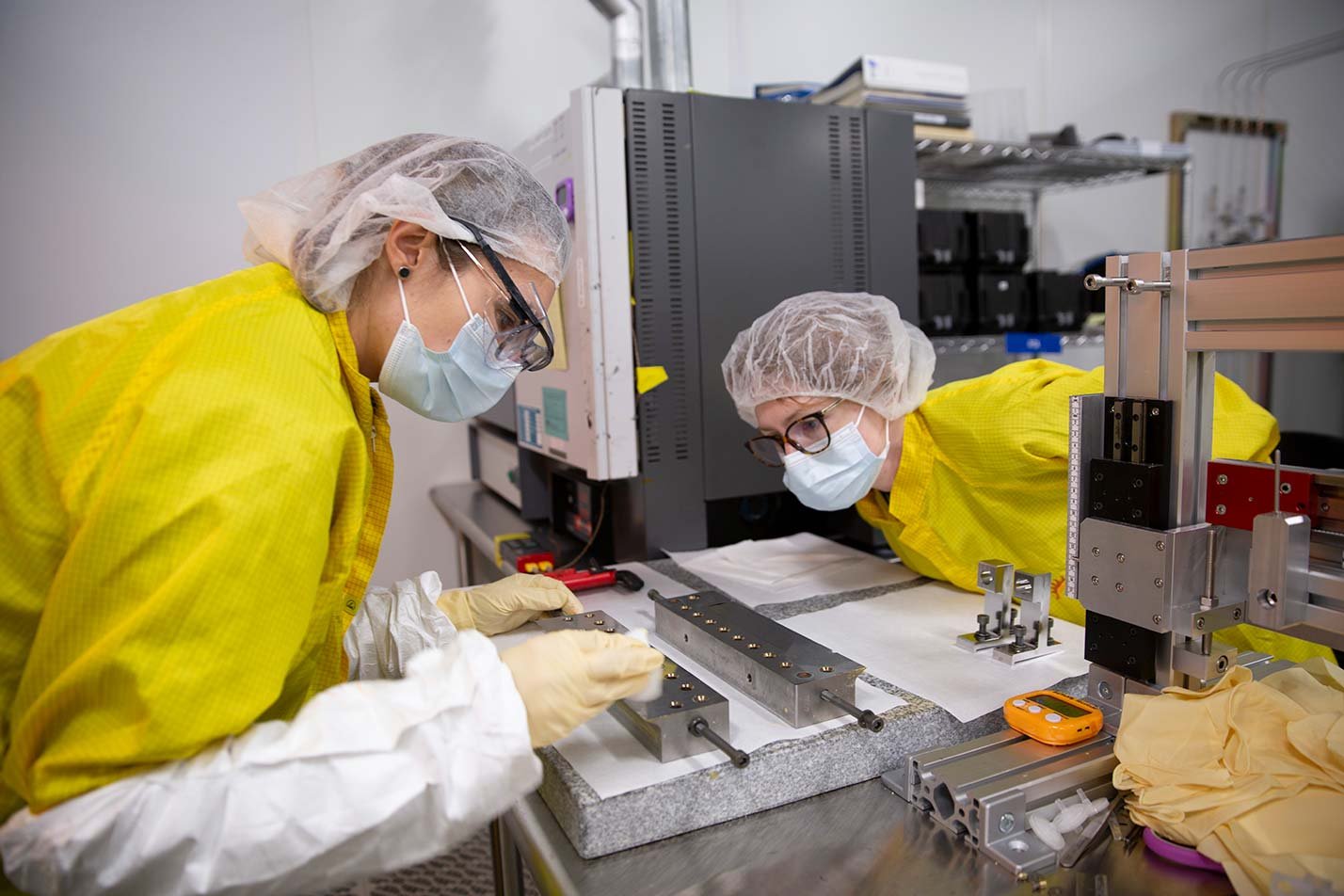
Master the full digital chip development workflow, including circuits and hardware design, verification, physical design and computational engineering. Build expertise through an applied curriculum where math and physics come alive within real semiconductor problems.
Quick facts

Locations


Courses

Additional facts
STEM-OPT extension eligible: Yes
International students (F1) can extend U.S. work experience by 24 months.
Accreditation
Accredited by the Higher Learning Commission.


Degree description
Engineering Science (Microelectronics) degree description
The Bachelor of Science program in engineering science with a concentration in microelectronics prepares you to excel in the microelectronics industry.
In this program, you master fundamental mathematics, coding, digital design and physics in your first year, while simultaneously learning how engineers solve problems, approach the design process, and consider societal and business aspects of their work. In your second and third years, you learn the engineering and computing tools used in the microelectronics industry and how they're used to design and fabricate complex microelectronic circuits. The final year focuses on methods of testing, developing and manufacturing semiconductors. You also complete a year-long capstone project with your peers and a faculty mentor.
Why specialize in microelectronics at ASU?
Rather than following a traditional engineering track, this concentration organizes learning around three integrated pathways --- circuit foundations, digital design and computational engineering --- that come together through hands-on projects and a year-long capstone. This intentional design widens access to engineering while holding a rigorous technical foundation in digital hardware, semiconductor systems and computational engineering, offering an applied route into semiconductor engineering with MAT 170: Precalculus as the highest required math course.
At ASU's School of Integrated Engineering on the West Valley campus, you learn in small classes with personalized advising and close faculty mentorship. You also develop AI-enabled engineering skills alongside the business, supply chain and communication knowledge that helps you thrive in the global semiconductor ecosystem, preparing you to support the technologies behind artificial intelligence, advanced manufacturing, communications, health care, automotive systems and consumer electronics.
Courses
Explore a sample list of courses you may take in this program.
| Sample courses |
|---|
| ACC 382 Accounting and Financial Analysis |
| ESC 490 Engineering Science Capstone I |
| ESC 491 Engineering Science Capstone II |
| FSE 100 Introduction to Engineering |
| FSE 104 EPICS Gold Feasibility and Planning |
| FSE 150 Perspectives on Grand Challenges for Engineering |

Course checksheet and curriculum archive
The curriculum checksheet displays this program's required courses and other requirements you must complete for graduation.
Current ASU students, see how your courses can apply to another major and find out how to change your major (opens in new window).


Already completed some college courses? Build on your success.
If you earned college credit outside ASU, our transfer tools map out your progress towards a degree and help you plan next steps.
See how your credits may apply (opens in new window)Admission requirements
Here are the admission and application details
All students are required to meet general university admission requirements.
First year (opens in new window) | Transfer (opens in new window) | International (opens in new window) | Readmission (opens in new window)
A current ASU student has no additional requirements for changing majors.
Students should visit the Change of Major form (opens in new window) for information about how to change a major to this program.
Explore expanded study opportunities
When you pursue concurrent degrees (also known as a “double major”), you earn two distinct degrees and receive two diplomas. Working with your academic advisor, you can create your own concurrent degree combination. Some combinations are not possible due to high levels of overlap in curriculum.
With more than 300 Global Education program opportunities available, engineering science students are able to tailor their experience to their interests and skill sets. Whether in a foreign country, in the U.S. or online, students build communication skills, learn to adapt and persevere, and are exposed to research and internships around the world, increasing their professional network.


Paying for college
Use our calculator to estimate your full-time or part-time tuition fees for this program prior to any financial aid. Keep in mind that most of our students receive financial aid, which can reduce out-of-pocket costs.
Get an estimate


Build the career and future you want
Our graduates are prepared for a variety of career paths, including:
| Career | Growth | Median Salary | More Information |
|---|---|---|---|
| Computer Hardware Engineer | 9.1% | $161,740 | Learn more |
| Data Analyst | -1.8% | $50,330 | Learn more |
| Electrical Engineering Technologist | 2.4% | $78,190 | Learn more |
| Engineering Manager | 5.5% | $171,270 | Learn more |
| Field Researcher | -4.8% | $69,460 | Learn more |
| Project Manager | 6.7% | $102,320 | Learn more |
| Quality Control Manager | 2.6% | $126,060 | Learn more |
| Technical Sales Engineer | 2.8% | $124,900 | Learn more |
Example job titles and salaries listed are not necessarily entry level, and students should take into consideration how years of experience and geographical location may affect pay scales. Some jobs also may require advanced degrees, certifications or state-specific licensure.
Data obtained from the Occupational Information Network (O*NET) under sponsorship of the U.S. Department of Labor/Employment and Training Administration (USDOL/ETA).
More about careers
Careers this microelectronics concentration prepares you for
Graduates of this engineering science program are well-prepared for a diverse and rewarding career landscape in areas such as:
- academia and education
- data analysis and modeling
- energy and environmental engineering
- engineering consulting
- manufacturing and quality control
- product design and development
- project management
- research and development
- technical sales and marketing
Contact information
Use the contact information below to get in touch if you're a current student or have general questions.
Prospective students should fill out the Request for Information form.
School of Integrated Engineering
|
FAB N134
SIE@asu.edu
602-543-5456
Frequently asked questions about degree programs
Accelerated programs allow students the opportunity to expedite the completion of their degree.
Accelerated master's
These programs allow students to accelerate their studies to earn a bachelor's plus a master's degree in as few as five years (for some programs).
Each program has requirements students must meet to be eligible for consideration. Students typically receive approval to pursue the accelerated master's during the junior year of their bachelor's degree program. Interested students can learn about eligibility requirements and how to apply.
Concurrent degrees allow students to pursue their own personal or professional interests, earn two distinct degrees and receive two diplomas. To add a concurrent degree to your existing degree, work with your academic advisor.
Joint programs, or jointly conferred degrees, are offered by more than one college and provide opportunities for students to take advantage of the academic strengths of two academic units. Upon graduation, students are awarded one degree and one diploma conferred by two colleges.
ASU adds new programs to Degree Search frequently. Come back often and look for the "New Programs" option.
ASU Online offers programs in an entirely online format with multiple enrollment sessions throughout the year. See https://asuonline.asu.edu/ for more information.
