

Media Arts and Sciences (Media Processing), BS
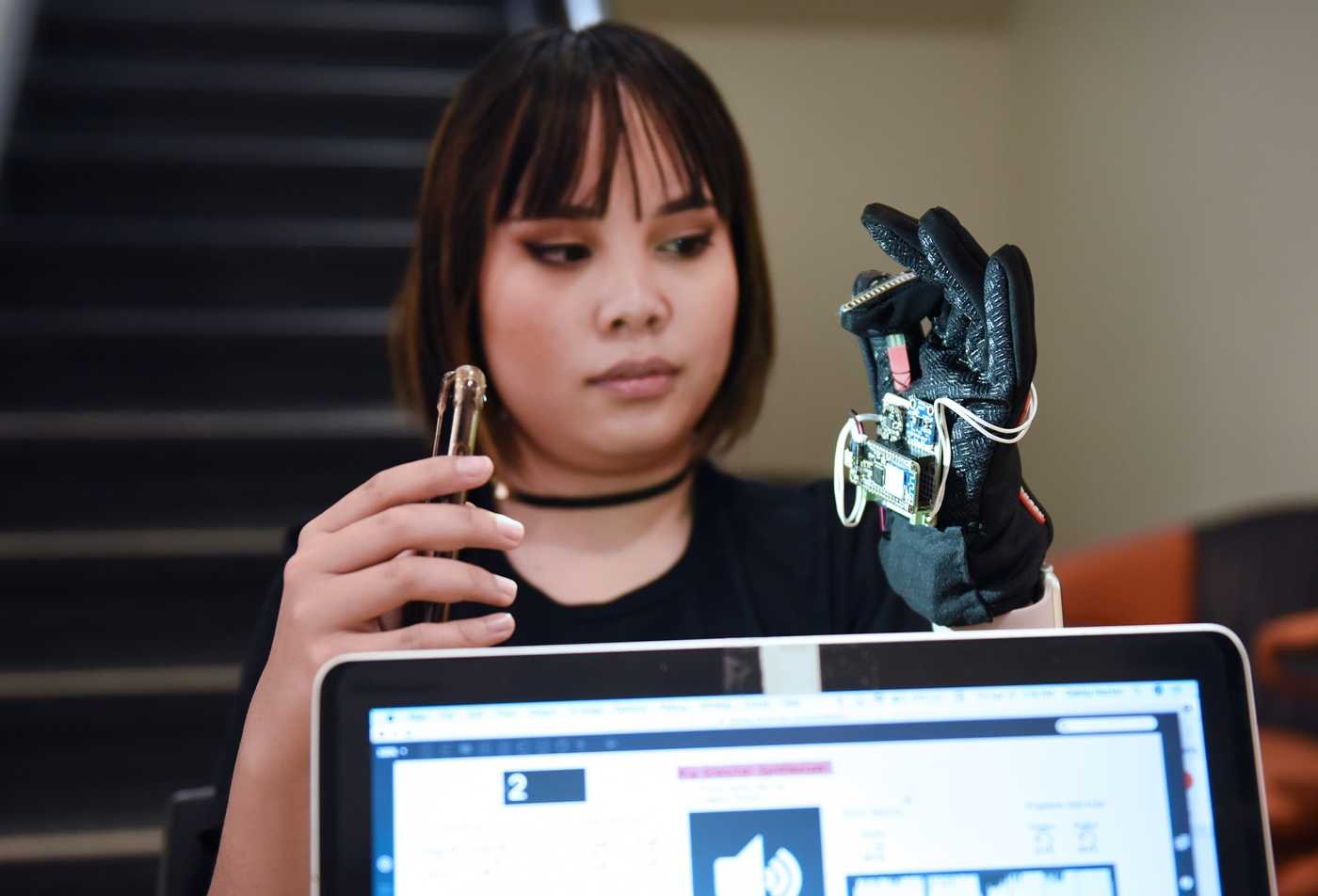
Digital media has revolutionized how we live, learn, create and communicate. Learn how to use, misuse and reimagine digital technology, computational systems and interactive media. You'll learn not just the how of tech, but also the why, using your artistic vision and a human-centric perspective to shape a vibrant digital future.
Quick facts

Locations


Courses

Additional facts
STEM-OPT extension eligible: Yes
International students (F1) can extend U.S. work experience by 24 months.
Accreditation
Accredited by the Higher Learning Commission.


Degree description
The GAME School educates the next generation of learners, empowering you with technofluency --- its development, application and implications.
In the Bachelor of Science program in media arts and sciences with a concentration in media processing, you gain the technical skills to develop computational media, and the cultural skills to apply them meaningfully. You immerse yourself in hands-on projects; explore the intertwined evolution of culture, society and tech; and create computational media systems with sound, video, objects, space and immersive media. This fusion of arts, humanities and engineering foundations enables you not only to craft innovative digital media but also to think critically about how technology and society are coproductive. The program's overarching goal is to develop you to be a socially conscious global citizen who is ready to navigate and shape a more connected and creative digital world.
The concentration program in media processing is offered in partnership with the Ira A. Fulton Schools of Engineering. You complement your knowledge of media arts and sciences with computer science coursework, which provides you with a more advanced understanding of programming, data structures, signal processing and system architecture.
Courses
Explore a sample list of courses you may take in this program.
| Sample courses |
|---|
| AME 111 Introduction to Digital Culture |
| AME 130 Prototyping Dreams |
| AME 230 Programming for the Media Arts |
| CSE 110 Principles of Programming |
| CSE 205 Object-Oriented Programming and Data Structures |
| CSE 240 Introduction to Programming Languages |
Course checksheet and curriculum archive
The curriculum checksheet displays this program's required courses and other requirements you must complete for graduation.
Current ASU students, see how your courses can apply to another major and find out how to change your major (opens in new window).






Already completed some college courses? Build on your success.
If you earned college credit outside ASU, our transfer tools map out your progress towards a degree and help you plan next steps.
See how your credits may apply (opens in new window)What you'll learn
The following learning outcomes highlight some of the knowledge and skills you'll develop to support your future success.
- Create digital media systems, using a cross-disciplinary lens of research and theories from humanities, arts, and sciences through a final capstone project.
- Create digital media systems, using a cross-disciplinary lens of research and theories from humanities, arts, and sciences through a final capstone project.
- Integrate knowledge from computational principles and practices into participatory media arts applications.
 Create digital media systems, using a cross-disciplinary lens of research and theories from humanities, arts, and sciences through a final capstone project.
Admission requirements
Here are the admission and application details
All students are required to meet general university admission requirements.
First year (opens in new window) | Transfer (opens in new window) | International (opens in new window) | Readmission (opens in new window)
An ASU student who would like to change their major to this program and would be new to this major must have a minimum cumulative GPA of 2.00. They must maintain this GPA to remain in good standing and to graduate.
Students should visit the Change of Major form (opens in new window) for information about how to change a major to this program.
Explore expanded study opportunities
When you pursue concurrent degrees (also known as a “double major”), you earn two distinct degrees and receive two diplomas. Working with your academic advisor, you can create your own concurrent degree combination. Some combinations are not possible due to high levels of overlap in curriculum.
Global Education programs enable media arts and sciences students to think critically about how computation impacts lives and the ways that culture makes a difference in how people experience computational media --- highly important skills in this dynamic age. With more than 300 options available to them, students can tailor their experience to their specific interests and skill sets. Whether in a foreign country, in the U.S. or online, students in media arts and sciences can be exposed to diverse cultural environments and differences worldwide and take in the broad uses of technology on a global scale.


Paying for college
Use our calculator to estimate your full-time or part-time tuition fees for this program prior to any financial aid. Keep in mind that most of our students receive financial aid, which can reduce out-of-pocket costs.
Get an estimate


Build the career and future you want
Our graduates are prepared for a variety of career paths, including:
| Career | Growth | Median Salary | More Information |
|---|---|---|---|
| Animator | -0.3% | $102,030 | Learn more |
| Audio-Visual Technician | 3.9% | $58,100 | Learn more |
| Computer Programmer | -7.3% | $100,390 | Learn more |
| Computer Scientist | 21.8% | $140,300 | Learn more |
| IT Project Manager | 5.1% | $116,580 | Learn more |
| Performance Artist | 2.0% | $71,240 | Learn more |
| Production Assistant | 3.9% | $73,620 | Learn more |
| Software Developer | 10.2% | $135,980 | Learn more |
| Video Game Designer | 6.0% | $104,000 | Learn more |
Example job titles and salaries listed are not necessarily entry level, and students should take into consideration how years of experience and geographical location may affect pay scales. Some jobs also may require advanced degrees, certifications or state-specific licensure.
Data obtained from the Occupational Information Network (O*NET) under sponsorship of the U.S. Department of Labor/Employment and Training Administration (USDOL/ETA).
More about careers
Career opportunities include positions in graphic design, design, audio, visual media, computer science, technology, technical writing, creative writing and comparative literature.
Media arts and sciences alumni have obtained careers as graphic designers, 3D modelers, special effects artists, visual media artists, programmers, engineers and software specialists with Apple, Microsoft, Cisco, Industrial Light & Magic, Pixar and other techno-centric companies.
Contact information
Use the contact information below to get in touch if you're a current student or have general questions.
Prospective students should fill out the Request for Information form.
The GAME School
|
STAUF-B 217
TheGameSchool@asu.edu
480-965-9432
Frequently asked questions about degree programs
Accelerated programs allow students the opportunity to expedite the completion of their degree.
Accelerated master's
These programs allow students to accelerate their studies to earn a bachelor's plus a master's degree in as few as five years (for some programs).
Each program has requirements students must meet to be eligible for consideration. Students typically receive approval to pursue the accelerated master's during the junior year of their bachelor's degree program. Interested students can learn about eligibility requirements and how to apply.
Concurrent degrees allow students to pursue their own personal or professional interests, earn two distinct degrees and receive two diplomas. To add a concurrent degree to your existing degree, work with your academic advisor.
Joint programs, or jointly conferred degrees, are offered by more than one college and provide opportunities for students to take advantage of the academic strengths of two academic units. Upon graduation, students are awarded one degree and one diploma conferred by two colleges.
ASU adds new programs to Degree Search frequently. Come back often and look for the "New Programs" option.
ASU Online offers programs in an entirely online format with multiple enrollment sessions throughout the year. See https://asuonline.asu.edu/ for more information.
