

Psychology (Psychological Science), BS
Study behavior and mental processes like a research scientist, sharpening skills in research design, statistical analysis and the evaluation of scientific evidence to prepare you for impactful careers.
Quick facts

Locations


Courses

or MAT 170 Pre-Calculus
Additional facts
STEM-OPT extension eligible: No
International students (F1), this program is not eligible for the STEM-OPT extension.
Accreditation
Accredited by the Higher Learning Commission.


Psychology (Psychological Science) degree description
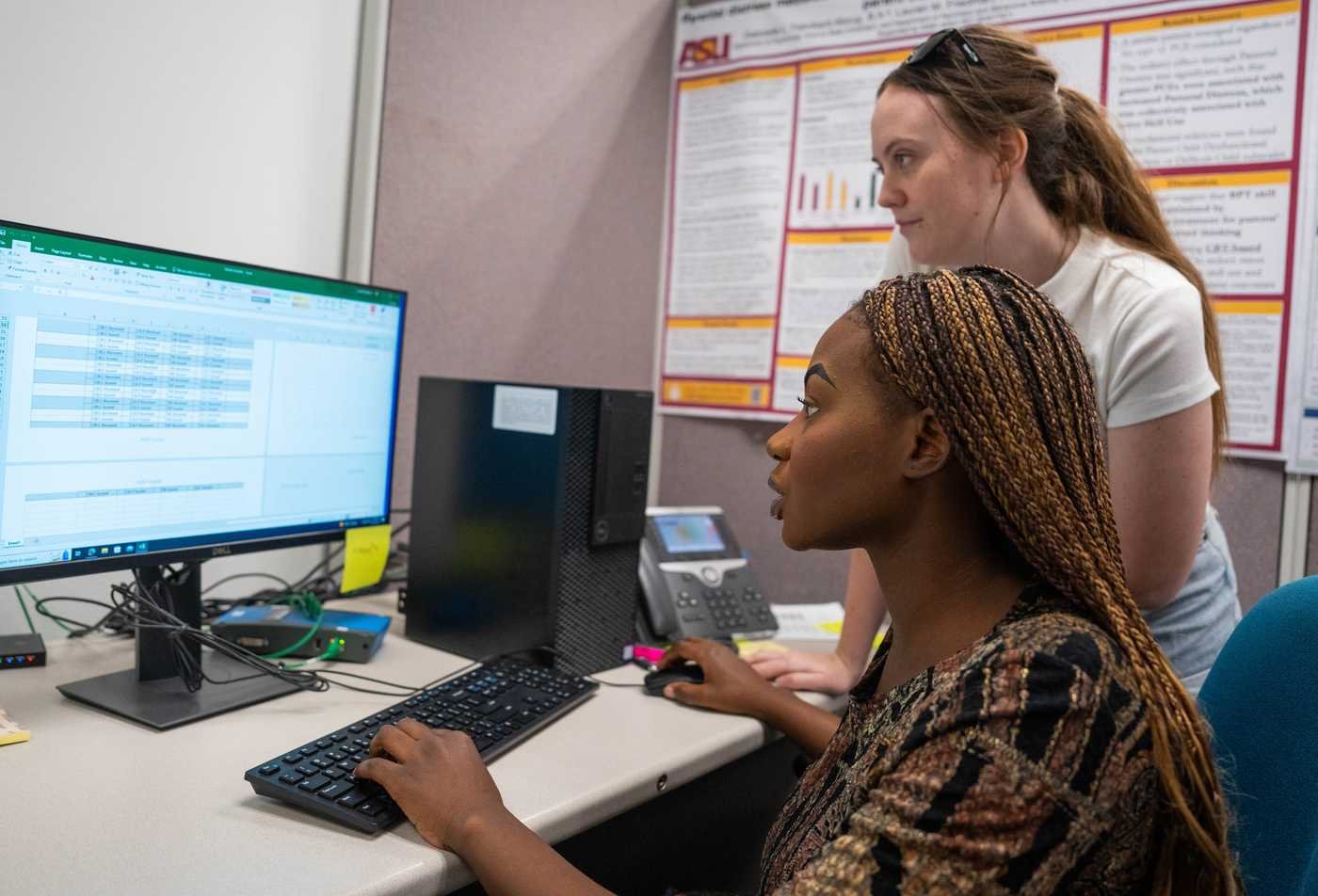
The Bachelor of Science program in psychology with a concentration in psychological science immerses you in research-focused learning. You collaborate with renowned faculty at the forefront of innovation and discovery, and explore human and animal behavior, stress, emotions and more from the perspective of a research scientist.
Tailored for those aspiring to pursue a Doctor of Philosophy or related scientific graduate studies, this program blends intensive coursework with hands-on learning. The program provides you with practical experience through internships and connects you to a robust mentorship network, where alumni guide you throughout your academic journey.
In addition to reviewing the guidelines in the Concurrent Program Options section below, if you're interested in pursuing concurrent or second baccalaureate degrees in The College of Liberal Arts and Sciences, you can visit The College's website for more information and requirements.
Why specialize in psychological science at ASU?
At ASU, the Department of Psychology unites psychology, neuroscience and graduate clinical training programs that prepare students for licensure, giving you a full view of the field as you learn. In this program, you'll work with faculty across more than 50 research labs in the Department of Psychology.
You can extend learning past the classroom through the undergraduate psychology internship program, which partners with more than 40 organizations across the Phoenix area, including La Frontera Arizona, Maricopa County Superior Courts and the Arizona Department of Child Safety.
Additional details
Student organizations offer more ways to connect. The Tempe Chapter of Psi Chi, the International Honor Society in Psychology, opens the door to a distinguished network of students, faculty and professionals advancing psychological science. Psych for All builds an inclusive community where members meet faculty, trade academic and career resources, and support one another's growth. The Psychology Engagement Team deepens student connections through events centered on research, career exploration and engagement. NeuroDevils gathers students drawn to neuroscience for educational programs, community outreach, networking and professional development with faculty and researchers from ASU and local research organizations.
Courses
Explore a sample list of courses you may take in this program.
| Sample courses |
|---|
| PSY 101 Introduction to Psychology |
| PSY 230 Introduction to Statistics |
| PSY 290 Research Methods |
| PSY 330 Statistical Methods |
| PSY 399 Supervised Research |
| PSY 320 Learning and Motivation |
Course checksheet and curriculum archive
The curriculum checksheet displays this program's required courses and other requirements you must complete for graduation.
Current ASU students, see how your courses can apply to another major and find out how to change your major (opens in new window).







Already completed some college courses? Build on your success.
If you earned college credit outside ASU, our transfer tools map out your progress towards a degree and help you plan next steps.
See how your credits may apply (opens in new window)What you'll learn
The following learning outcomes highlight some of the knowledge and skills you'll develop to support your future success.
- Exercise scientific reasoning when investigating psychological phenomena in a research project.
- Differentiate the specific subfields and themes (e.g., nature vs. nurture; mind and body) of Psychology.
- Evaluate research findings and interpret their implications for the field of study in a final research project.
 Exercise scientific reasoning when investigating psychological phenomena in a research project.
Admission requirements
Here are the admission and application details
All students are required to meet general university admission requirements.
First year (opens in new window) | Transfer (opens in new window) | International (opens in new window) | Readmission (opens in new window)
The BS in psychology with a concentration in psychological science is open to students who have: Students must maintain a minimum cumulative GPA of 3.00 from admittance through graduation.
Students who wish to change their ASU major to this program must have completed all critical courses for the BS in psychology (ENG 101, ENG 102, MAT 119 or MAT 170, PSY 101, PSY 230, PSY 290) with a "C" or higher and have at least 45 earned credit hours.
Students must maintain a minimum cumulative GPA of 3.00 from admittance through graduation.
Students should visit the Change of Major form (opens in new window) for information about how to change a major to this program.
Explore expanded study opportunities
When you pursue concurrent degrees (also known as a “double major”), you earn two distinct degrees and receive two diplomas. Working with your academic advisor, you can create your own concurrent degree combination. Some combinations are not possible due to high levels of overlap in curriculum.
When studying abroad, students are able to enhance their understanding of human interaction, culture and behavior through the specific cultural experiences afforded by the opportunities inherent in their program.
Global Education programs expose students to distinct differences in the human condition elsewhere in the world, expanding their knowledge. Students gain heightened cultural competence, and communication and critical thinking skills while exploring a new and exciting part of the world. This valuable skill set can set them apart from other applicants when they apply for graduate school or pursue a job after graduation.
The College of Liberal Arts and Sciences recommends these programs for students majoring in psychology.


Paying for college
Use our calculator to estimate your full-time or part-time tuition fees for this program prior to any financial aid. Keep in mind that most of our students receive financial aid, which can reduce out-of-pocket costs.
Get an estimate


Build the career and future you want
Our graduates are prepared for a variety of career paths, including:
| Career | Growth | Median Salary | More Information |
|---|---|---|---|
| Industrial Psychologist | 6.5% | $193,950 | Learn more |
| Lawyer | 4.7% | $159,670 | Learn more |
| Licensed Clinical Psychologist | 11.7% | $100,580 | Learn more |
| Neuropsychologist | 2.3% | $110,840 | Learn more |
| Occupational Therapist (OT) | 14.8% | $100,330 | Learn more |
| Physician Assistant (PA) | 21.1% | $135,880 | Learn more |
| Psychiatrist | 7.2% | $281,870 | Learn more |
| Psychology Professor | 4.0% | $80,340 | Learn more |
| School Psychologist | 0.8% | $95,990 | Learn more |
Example job titles and salaries listed are not necessarily entry level, and students should take into consideration how years of experience and geographical location may affect pay scales. Some jobs also may require advanced degrees, certifications or state-specific licensure.
Data obtained from the Occupational Information Network (O*NET) under sponsorship of the U.S. Department of Labor/Employment and Training Administration (USDOL/ETA).
More about careers
Careers this psychological science concentration prepares you for
A BS degree in psychology that focuses on psychological science opens doors to versatile career paths. Graduates emerge collaborative and are prepared for impactful careers doing research that makes a difference in people's lives. They are well prepared for diverse roles in health and research teaching.
The program's strong foundation also readies students for competitive graduate-level programs in all areas of psychology, law and medicine.
Contact information
Use the contact information below to get in touch if you're a current student or have general questions.
Prospective students should fill out the Request for Information form.
Department of Psychology
|
PSY 202
psych.advisor@asu.edu
480-965-7258
Frequently asked questions about degree programs
Accelerated programs allow students the opportunity to expedite the completion of their degree.
Accelerated master's
These programs allow students to accelerate their studies to earn a bachelor's plus a master's degree in as few as five years (for some programs).
Each program has requirements students must meet to be eligible for consideration. Students typically receive approval to pursue the accelerated master's during the junior year of their bachelor's degree program. Interested students can learn about eligibility requirements and how to apply.
Concurrent degrees allow students to pursue their own personal or professional interests, earn two distinct degrees and receive two diplomas. To add a concurrent degree to your existing degree, work with your academic advisor.
Joint programs, or jointly conferred degrees, are offered by more than one college and provide opportunities for students to take advantage of the academic strengths of two academic units. Upon graduation, students are awarded one degree and one diploma conferred by two colleges.
ASU adds new programs to Degree Search frequently. Come back often and look for the "New Programs" option.
ASU Online offers programs in an entirely online format with multiple enrollment sessions throughout the year. See https://asuonline.asu.edu/ for more information.
