

Exercise and Nutritional Sciences, PhD
Conduct high-impact research at the intersection of exercise science, nutrition and health promotion. This program pairs you with nationally recognized faculty on translational research that moves from lab discovery to community impact, preparing you to become a researcher, faculty member or health innovator.
Quick facts

Locations


Credits
Additional facts
STEM-OPT extension eligible: Yes
International students (F1) can extend U.S. work experience by 24 months.
Accreditation
Accredited by the Higher Learning Commission.


Degree description
Exercise and Nutritional Sciences, PhD degree description
Within integrated disciplinary contexts, the Doctor of Philosophy program in exercise and nutritional sciences curriculum trains you to be a scholar and leader who conducts high-impact, interdisciplinary and translational research in exercise and nutritional sciences.
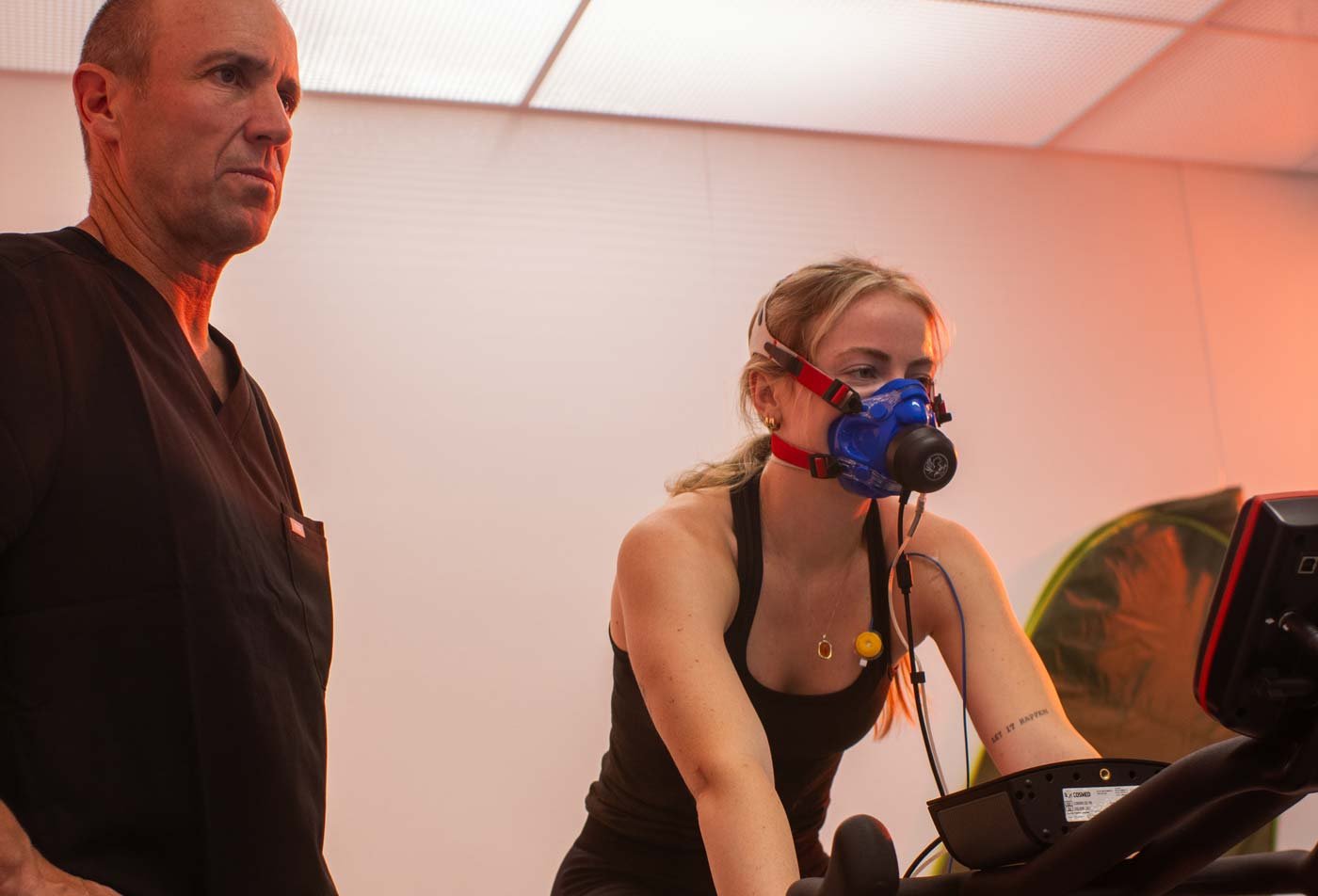
You and faculty members conduct high-quality, use-inspired research in exercise, nutrition and health promotion that's intended to reduce the physical, social and economic costs of unhealthy living. You engage in research at every stage of the program through:
- dissertation research
- participation in research practicums
- preclinical research and clinical trials
- research seminars and colloquia
- translational research teams
You work collaboratively with an approved mentor throughout the program and focus your research on one of three primary areas of interest: translational metabolism and physiology, behavioral and community health sciences, or biomechanics and motor control.
If you've earned a master's degree, you can complete the program in four years of full-time study. The program also accepts part-time students.
Why earn your exercise and nutritional sciences PhD at ASU?
This exercise science doctoral program takes an interdisciplinary approach that brings together exercise science, nutrition, physiology, behavior change and community health. Rather than staying in the lab, your research moves discoveries into clinical and community settings where they can improve health outcomes.
You follow a mentor-driven model, working closely with faculty researchers throughout the program. You can shape your work around one of three focus areas: translational metabolism and physiology, behavioral and community health sciences, or biomechanics and motor control.
You work with faculty conducting research on chronic disease prevention, health disparities, physical activity, nutrition and population health. A professional development curriculum builds your skills in evidence-based teaching practices, grant writing and career preparation, while clinical trials, research practicums and collaborative research teams give you hands-on experience.
Additional details
Beyond your research, you can connect with peers through the Exercise and Nutritional Sciences and Population Health Graduate Student Club. The club offers professional development, volunteering and social activities that help you build community during your studies.
Curriculum
This graduate degree includes courses focused on a specialized topic, so you can advance your skills for further professional opportunities. Explore all courses below.
84 credit hours, a written comprehensive exam, an oral comprehensive exam, a prospectus and a dissertation
Required Core (6 credit hours) Required Research (16 credit hours) Elective Research (12 credit hours) Professional Development (5 credit hours) Focus Area (9 credit hours) Electives (24 credit hours) Culminating Experience (12 credit hours) Additional Curriculum Information The program integrates professional development through a teaching seminar (CHS 791: Evidence-based Teaching Practices) and a three-semester seminar (CHS 791 Seminar: Early Career Professional Development) that addresses career opportunities and preparation for faculty or professional positions in the nutrition, exercise and health promotion fields. Students entering the doctoral program with a master's degree in a related discipline may count up to 24 credit hours from the master's degree toward the total credit hours, with program approval.
BST 515 Applied Biostatistics in Medicine and Informatics (3)
EXW 645 Advanced Applied Methods and Data Analysis (3)
CHS 600 Research Methods: Translational Science (3)
CHS 791 Seminar: Exercise and Nutrition Journal Club (1)
EXW 700 Research Methods (3)
EXW 701 Scientific Grant Writing (3)
EXW 780 or NTR 780 Practicum (6)
CHS 791 Seminar: Early Career Professional Development (3)
CHS 791 Seminar: Evidence-based Teaching Practices (2)
EXW 799 or NTR 799 Dissertation (12)
Students tailor a course of study in one of three focus areas: behavioral and community health sciences, biomechanics and motor control, or translational metabolism and physiology. Courses in the focus area are determined in collaboration with the student's supervisory committee.


What you'll learn
The following learning outcomes highlight some of the knowledge and skills you'll develop to support your future success.
- Apply appropriate advanced research methodology in the design and evaluation of research studies in exercise and nutritional sciences.
- Apply appropriate statistical analyses to evaluate research and data relevant to exercise and nutritional sciences.
- Communicate research findings to scientific audiences, including peer-reviewed literature and presentations at scientific conferences and to lay audiences.
- Create a grant proposal that clearly demonstrates significance, innovation and a scientifically justified approach to address a novel research question.
 Apply appropriate advanced research methodology in the design and evaluation of research studies in exercise and nutritional sciences.
Admission requirements
Here are the admission and application details
All students are required to meet general university admission requirements.
U.S. applicants (opens in new window) | International applicants (opens in new window) | English proficiency (opens in new window)
Applicants must fulfill the requirements of both the Graduate College and the College of Health Solutions. Applicants are eligible to apply to the program if they have earned a bachelor's or master's degree in nutrition, exercise science, kinesiology or a related field from a regionally accredited institution. Completion of a data-based research thesis is preferred for applicants entering with a master's degree. Applicants must have a minimum cumulative GPA of 3.00 (scale is 4.00 = "A") in the last 60 hours of their first bachelor's degree program and a minimum cumulative GPA of 3.00 (scale is 4.00 = "A") in an applicable master's degree program. All applicants must submit: Additional Application Information The letter of intent should indicate research or scholarly interest and primary program area and include a statement of career goals and the name of a potential faculty mentor from the list of approved faculty mentors. Students admitted to the program are expected to have documented academic training and a strong interest in nutrition science, exercise science, biomechanics or health promotion. Thus, depending on their academic training, background, scholarly interests and focus area, a student may be asked to take undergraduate courses as deficiencies before or during graduate course enrollment. Applicants with a bachelor's degree only must have completed coursework in the following areas before matriculation: Applicants with a master's degree in a related area (nutrition, exercise science, kinesiology or related field) must have complete coursework in the following competencies before matriculation: Contact information for three references is required. References are contacted via email to submit a letter of recommendation and respond to a series of questions about the applicant. Strong applicants are contacted to schedule an interview via teleconference before acceptance.
An applicant whose native language is not English must provide proof of English proficiency regardless of their current residency.
Application deadlines
| Session | Modality | Deadline | Type |
|---|---|---|---|
| Session A/C | In Person | 12/01 | Priority* |
*A priority deadline means that applications submitted and completed before the priority deadline will receive priority consideration. Applications submitted after the priority deadlines will be reviewed in the order in which they were completed and on a space-available basis. An application is complete after all materials are received by Admission Services.


Paying for college
Use our calculator to estimate your full-time or part-time tuition fees for this program prior to any financial aid. Keep in mind that most of our students receive financial aid, which can reduce out-of-pocket costs.
Get an estimateCareer opportunities
Careers this exercise and nutritional sciences PhD degree prepares you for
Graduates are prepared for research careers in research-intensive universities, government agencies and health-related research positions in private industry. Students are strongly encouraged to pursue postdoctoral research opportunities upon graduation to further enhance career opportunities.
Career examples include:
- consultant
- entrepreneur
- exercise physiologist
- dietician or nutritionist
- health, research or sports scientist
- postsecondary biomechanics, exercise science or nutrition teacher
- professor
- public health professional
- scientist in pharmaceutical, food science and other related industry

Contact information
Use the contact information below to get in touch if you're a current student or have general questions.
Prospective students should fill out the Request for Information form.
School of Human Performance and Lifespan Health
|
HLTHN 401AA
CHSGrad@asu.edu
602-496-3300
Frequently asked questions about degree programs
Accelerated programs allow students the opportunity to expedite the completion of their degree.
Accelerated master's
These programs allow students to accelerate their studies to earn a bachelor's plus a master's degree in as few as five years (for some programs).
Each program has requirements students must meet to be eligible for consideration. Students typically receive approval to pursue the accelerated master's during the junior year of their bachelor's degree program. Interested students can learn about eligibility requirements and how to apply.
Concurrent degrees allow students to pursue their own personal or professional interests, earn two distinct degrees and receive two diplomas. To add a concurrent degree to your existing degree, work with your academic advisor.
Joint programs, or jointly conferred degrees, are offered by more than one college and provide opportunities for students to take advantage of the academic strengths of two academic units. Upon graduation, students are awarded one degree and one diploma conferred by two colleges.
ASU adds new programs to Degree Search frequently. Come back often and look for the "New Programs" option.
ASU Online offers programs in an entirely online format with multiple enrollment sessions throughout the year. See https://asuonline.asu.edu/ for more information.
The Western Regional Graduate Program (WRGP) provides a reduced tuition rate to non-resident graduate students who qualify. Visit the WRGP/WICHE webpage for more information: https://graduate.asu.edu/wiche.
