

Neuroscience, PhD
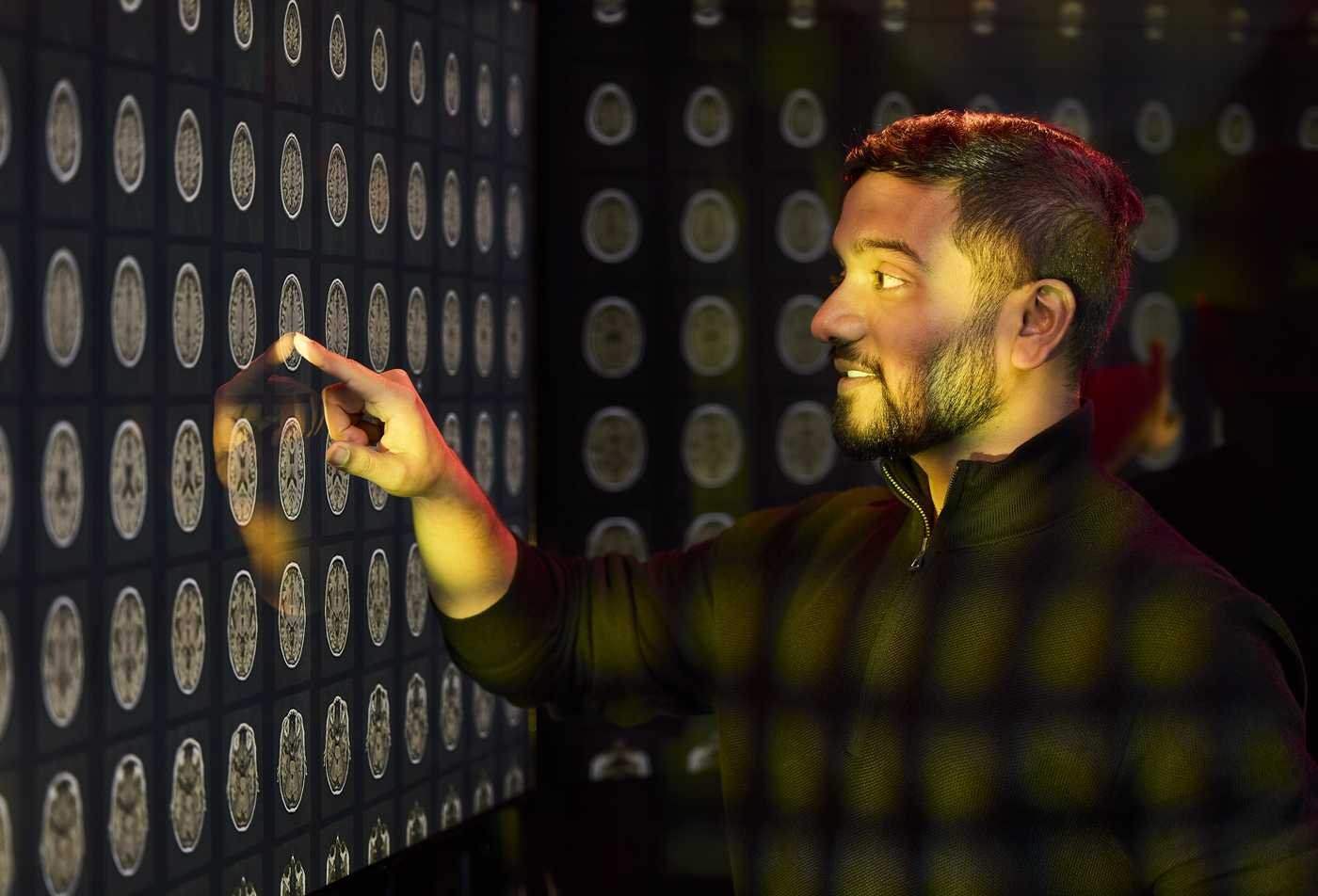
Investigate recent breakthroughs in how the nervous system functions and how disease takes hold. Dig into the biology of the brain, turning your curiosity about the nervous system and disease into rigorous doctoral research.
Quick facts

Locations


Credits
Additional facts
STEM-OPT extension eligible: Yes
International students (F1) can extend U.S. work experience by 24 months.
Accreditation
Accredited by the Higher Learning Commission.


Neuroscience, PhD degree description
Neuroscience is the scientific study of the nervous system. Studies in neuroscience can be multifaceted and combine physiology, anatomy, molecular biology, genetics and mathematical modeling, with the aim of understanding the fundamental and emergent properties of the many different cells in the brain and how they interact and coregulate each other.
You integrate several levels of analysis --- molecular, cellular, systems, behavioral and cognitive --- to investigate basic, translational and clinical questions about the relationship between the brain and behavior.
The Doctor of Philosophy program in neuroscience includes aspects of graduate-level training from many different units on campus and from the program's partner institutions distributed across the greater Phoenix area. Partner institutions include Barrow Neurological Institute, Translational Genomics Research Institute, University of Arizona College of Medicine-Phoenix and the Banner Sun Health Research Institute.
Curriculum
This graduate degree includes courses focused on a specialized topic, so you can advance your skills for further professional opportunities. Explore all courses below:
84 credit hours, a written comprehensive exam, an oral comprehensive exam, a prospectus and a dissertation
Required Core (8 credit hours) Electives or Research (58 credit hours) Other Requirements (6 credit hours) Culminating Experience (12 credit hours) Additional Curriculum Information
BIO 610 Introduction to Responsible Conduct of Research (RCR) in Life Sciences (1)
NEU 556 Human Systems Neuroscience (4)
NEU 576 Cellular and Molecular Neuroscience (3)
NEU 558 Neuroscience Journal Club (1)
NEU 591 Seminar (3)
NEU 799 Dissertation (12)
Students take NEU 558 three times for one credit hour.






What you'll learn
The following learning outcomes highlight some of the knowledge and skills you'll develop to support your future success.
- Apply core neuroscientific concepts to address fundamental questions regarding nervous system function and associated pathologies.
- Execute an independent research plan of their own design that tests hypotheses related to neuroscience.
- Effectively communicate neuroscientific concepts, both orally and in writing.
 Apply core neuroscientific concepts to address fundamental questions regarding nervous system function and associated pathologies.
Admission requirements
Here are the admission and application details
All students are required to meet general university admission requirements.
U.S. applicants (opens in new window) | International applicants (opens in new window) | English proficiency (opens in new window)
Applicants must fulfill the requirements of both the Graduate College and The College of Liberal Arts and Sciences. Applicants must have earned a bachelor's or master's degree from a regionally accredited institution. Applicants must have a minimum cumulative GPA of 3.00 (scale is 4.00 = "A") in the last 60 hours of their first bachelor's degree program or a minimum cumulative GPA of 3.00 (scale is 4.00 = "A") in an applicable master's degree program. Regular admission may be granted to applicants who have achieved the minimum cumulative GPA or higher in the last two years of work leading to a bachelor's degree and who are competitive in the applicant pool, as evidenced by letters of recommendation. Particular attention is paid to research experience and overall preparation in problem-solving, as evidenced by previous coursework and research experiences. There are no specific undergraduate course requirements other than those implied by the degree requirements described above. Most students are expected to have completed coursework in biology, chemistry and math. All applicants must submit: Additional Application Information Research experience is a desired qualification.
An applicant whose native language is not English must provide proof of English proficiency regardless of their current residency.
Application deadlines
| Session | Modality | Deadline | Type |
|---|---|---|---|
| Session A/C | In Person | 11/15 | Final* |
*A final deadline means that all applications and application materials must be received by Admission Services by the deadline date. Applications that are incomplete may not be considered after the final deadline. Applications that are submitted past the final deadline may not be considered.


Paying for college
Use our calculator to estimate your full-time or part-time tuition fees for this program prior to any financial aid. Keep in mind that most of our students receive financial aid, which can reduce out-of-pocket costs.
Get an estimateCareer opportunities
Careers this neuroscience PhD degree prepares you for
Graduates with a PhD in neuroscience have strong preparation for academic careers at every level, from community colleges to research universities. Graduates also apply the skills and knowledge obtained in this program to government careers in federal and state agencies, in industry (biotech, medical or pharmaceutical), and in nongovernmental organizations.
Career examples include:
- biomedical or health care scientist in academic, biotech or industry labs
- K-12 science teacher (elementary or high school)
- principal investigator leading a research group in a government or nonprofit setting
- university or college faculty member (professor, lecturer, instructor, etc.)


Contact information
Use the contact information below to get in touch if you're a current student or have general questions.
Prospective students should fill out the Request for Information form.
School of Life Sciences
|
LSA 181
sols.grad@asu.edu
480-965-1768
Admission deadlines
Frequently asked questions about degree programs
Accelerated programs allow students the opportunity to expedite the completion of their degree.
Accelerated master's
These programs allow students to accelerate their studies to earn a bachelor's plus a master's degree in as few as five years (for some programs).
Each program has requirements students must meet to be eligible for consideration. Students typically receive approval to pursue the accelerated master's during the junior year of their bachelor's degree program. Interested students can learn about eligibility requirements and how to apply.
Concurrent degrees allow students to pursue their own personal or professional interests, earn two distinct degrees and receive two diplomas. To add a concurrent degree to your existing degree, work with your academic advisor.
Joint programs, or jointly conferred degrees, are offered by more than one college and provide opportunities for students to take advantage of the academic strengths of two academic units. Upon graduation, students are awarded one degree and one diploma conferred by two colleges.
ASU adds new programs to Degree Search frequently. Come back often and look for the "New Programs" option.
ASU Online offers programs in an entirely online format with multiple enrollment sessions throughout the year. See https://asuonline.asu.edu/ for more information.
The Western Regional Graduate Program (WRGP) provides a reduced tuition rate to non-resident graduate students who qualify. Visit the WRGP/WICHE webpage for more information: https://graduate.asu.edu/wiche.
