

Audiology, AuD
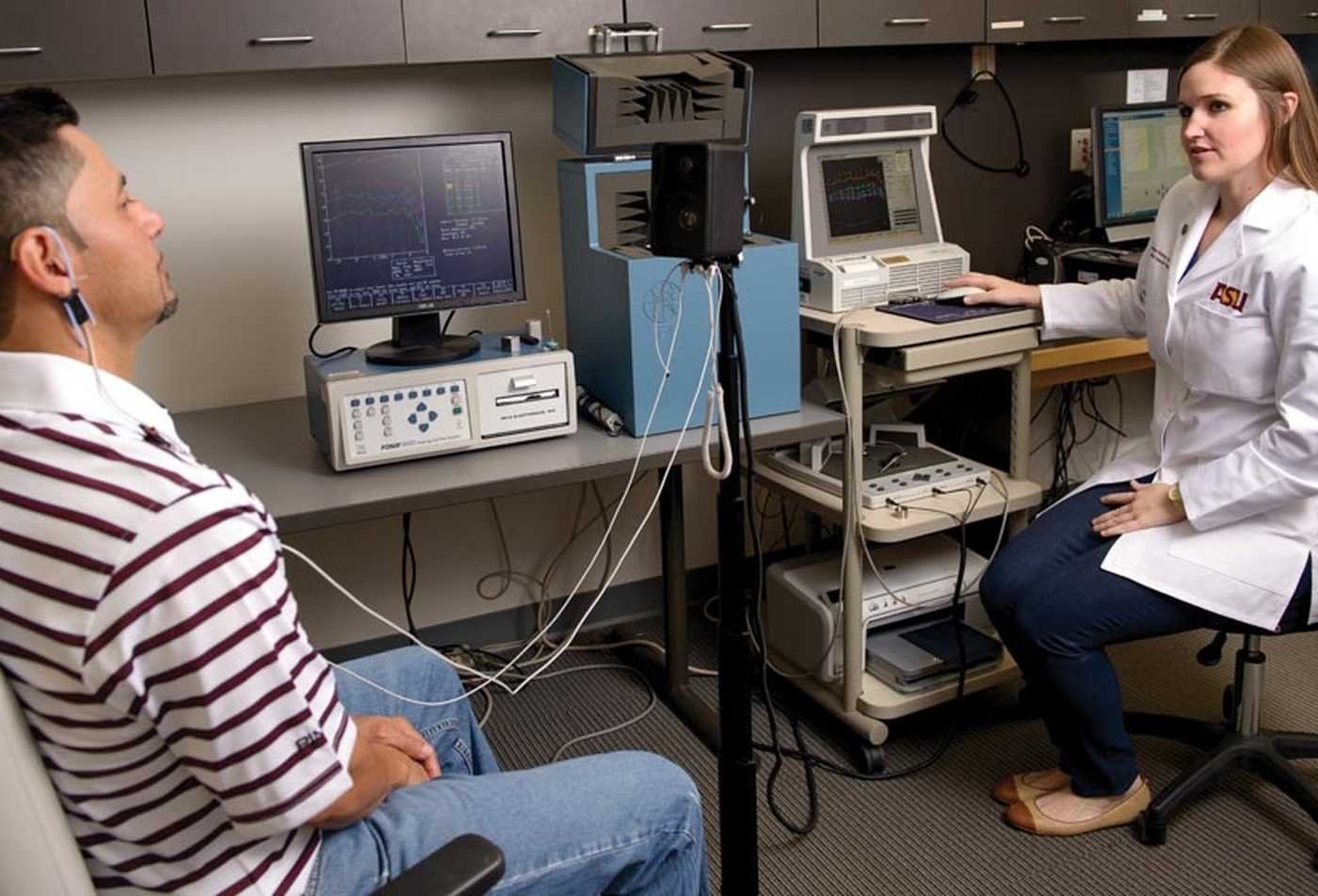
Understand how to identify, manage and treat hearing loss and balance disorders in individuals of all ages. As a licensed audiologist, you can provide technological and aural rehabilitative support in an evidence-based manner to alleviate communication difficulties, assist patients in reestablishing social connections, and improve quality of life.
Quick facts

Locations


Credits
Additional facts
STEM-OPT extension eligible: No
International students (F1), this program is not eligible for the STEM-OPT extension.
Accreditation and professional licensure
The Audiology, AuD education program in audiology residential at Arizo...
Accredited by the Higher Learning Commission.
ASU is not currently accepting applications for this program.


Degree description
The three-year course of study for the Doctor of Audiology degree consists of basic science coursework, professional knowledge coursework and clinical practicum experiences. Full-time commitment is critical because graduate courses are offered once per academic year. In addition, course content and the sequence of courses are closely tied to clinical practicum assignments. Moreover, full-time enrollment ensures timely completion of the program.
You have the option of graduating after the completion of the three-year program of study or enrolling in a clinical externship during your fourth year for up to an additional three credit hours of clinical training. A minimum of 850 hours of clinical training is required for graduation and is obtained during the first three years of training. Additional practicum hours toward the 1,820 hours required for the Certificate of Clinical Competence in Audiology, also known as CCC-A, by the American Speech-Language-Hearing Association can be met during completion of the fourth year externship under the supervision of an ASHA-certified audiologist. The remaining clinical clock hours for ASHA certification can also be met after graduation. However, you should be aware of state licensure requirements when making the determination of whether or not to complete an externship. Initial licensure in some states may require the completion of the externship.
Curriculum
This graduate degree includes courses focused on a specialized topic, so you can advance your skills for further professional opportunities. Explore all courses below:
88 credit hours, a written comprehensive exam and an oral comprehensive exam
Required Core (58 credit hours) Other Requirements (27-30 credit hours) Electives and Research (3 credit hours) Culminating Experience Additional Curriculum Information Because certification and licensure requirements vary by profession and from state to state, the College of Health Solutions recommends that students visit the ASU licensure website to determine if their program meets the requirements of individual state licensures or national certifications, as applicable. The decision to complete an externship or not is an individual decision based on career objectives and desired state of licensure among other factors. In addition to the Graduate College requirements, eligibility for graduation is based on the following: Formative Exam (Year 1) Summative Exam (Year 3) National Certification Exam (Praxis) Clinical Clock Hours
SHS 502 Basic Audiometry (4)
SHS 504 Amplification I (4)
SHS 505 Sign Language for Audiologists and Speech Pathologists (2)
SHS 508 Pediatric Audiology (3)
SHS 510 Amplification II (3)
SHS 511 Auditory Perception by the Hearing Impaired (3)
SHS 513 Auditory Neuroscience (3)
SHS 516 Auditory Evoked Potentials (4)
SHS 517 Balance Assessment (4)
SHS 518 Rehabilitative Audiology (3)
SHS 520 Auditory Pathologies/Disorders and Otoneurologic Applications (4)
SHS 522 Tinnitus/Advanced Audiometry (3)
SHS 523 Central Auditory Processing Disorders (4)
SHS 524 Counseling in Communication Disorders (2)
SHS 525 Audiology Practice Management (3)
SHS 526 Launch to Clinical Methods in Audiology (1)
SHS 552 Physiological Measures of Auditory Function (4)
SHS 555 Cochlear Implants (4)
SHS 500 Research Methods (3)
SHS 580 Clinical Practicum (8)
SHS 584 Clinical Internship (12)
SHS 589 Audiology Grand Rounds (4)
SHS 590 Reading and Conference (Audiology Clerkship) (0-3)
American Speech-Language-Hearing Association Praxis national certification examination in audiology (0)
written and oral comprehensive exam
Students have the option to continue enrollment in SHS 590 at one credit hour per semester for up to three semesters for the additional training experience and to complete the externship requirements of the ASHA certification if desired. These extra hours of clinical experience allow students to apply for ASHA certification upon graduation or for state licensure for certain states. Students should maintain continuous enrollment and not apply for graduation until they have completed the additional clinical hours for the certification.
Students must pass a formative exam given at the end of the first academic year of the program. This is a 100-question multiple-choice test covering the content of the courses taken during the fall and spring semesters. Students who receive scores of less than 70% are given one opportunity to retake the exam.
Students must pass a summative exam in the fall of the third academic year of the program. This is a comprehensive written and oral exam pertaining to clinical case diagnosis and management. One retake is allowed if the student does not pass on the initial attempt.
All students pursuing the Doctor of Audiology degree must pass the praxis examination in audiology as a graduation requirement. There are no credit hours tied to it. For the graduation approval to be processed, the praxis exam result must be sent directly from the Education Testing Service to the ASU audiology program office.
Students must successfully complete 850 hours of supervised clinical clock hours as accrued between on-campus clinic, off-campus internship sites and possible simulation opportunities.







What you'll learn
The following learning outcomes highlight some of the knowledge and skills you'll develop to support your future success.
- Students graduating from the AuD program will be able to understand and apply the foundations of clinical practice that provide the building blocks for professional, evidence-based practice of audiology.
- Students graduating from the AuD program will be able to analyze and evaluate clinical information by graduation.
- Students graduating from the AuD program will meet eligibility criteria for certification or licensure in audiology.
 Students graduating from the AuD program will be able to understand and apply the foundations of clinical practice that provide the building blocks for professional, evidence-based practice of audiology.
Admission requirements
Here are the admission and application details
All students are required to meet general university admission requirements.
U.S. applicants (opens in new window) | International applicants (opens in new window) | English proficiency (opens in new window)
Applicants must fulfill the requirements of both the Graduate College and the College of Health Solutions. Applicants are eligible to apply to the program if they have earned a bachelor's degree in speech and hearing science or another related discipline from a regionally accredited institution. Applicants with degrees in related fields, such as nursing, education and any of the biological sciences may apply; although, they may be admitted as leveling students and must complete at least one year of prerequisite courses in speech and hearing science at the undergraduate level. Applicants must have a minimum cumulative GPA of 3.00 (scale is 4.00 = "A") in the last 60 hours of their first bachelor's degree program. All applicants must submit: Additional Application Information Upon receipt of the application, a timed writing statement is administered as part of the first stage of the admission process. Applicants meeting the first-stage admission criteria are notified and invited to provide additional information to complete the second stage of the admission process. All other applicants are denied admission. Invited applicants who wish to continue the application process must provide a seven- to 10-minute video introducing themselves and answering several questions from the admission committee. The same questions are given to all applicants, along with instructions about format and submission. Applicants who do not submit a video and writing sample are denied admission. The committee may ask to schedule an interview to ascertain additional information from applicants after reviewing the recorded video and will make final decisions regarding admission. Space is available for a total of 15 students. Invitations are sent by the beginning of February, with a deadline for video submission in mid-February. The personal statement should not exceed 300 words and should describe the reasons for pursuing graduate study in audiology; successful applicants submit statements that are free of grammatical errors and demonstrate proficiency in written communication. Letters of recommendation should outline the applicant's potential success for graduate-level coursework. Letters from faculty members are most useful. A standard form is not used; letters should be submitted on letterhead from the recommender's institution.
An applicant whose native language is not English must provide proof of English proficiency regardless of their current residency.
Application deadlines
| Session | Modality | Deadline | Type |
|---|---|---|---|
| Session A/C | In Person | 01/15 | Final* |
*A final deadline means that all applications and application materials must be received by Admission Services by the deadline date. Applications that are incomplete may not be considered after the final deadline. Applications that are submitted past the final deadline may not be considered.


Paying for college
Use our calculator to estimate your full-time or part-time tuition fees for this program prior to any financial aid. Keep in mind that most of our students receive financial aid, which can reduce out-of-pocket costs.
Get an estimateCareer opportunities
A career as an audiologist offers fulfilling work with an exceptional work-life balance. Graduates who complete the Doctor of Audiology degree find rewarding careers in hospitals, physician's offices, audiology clinics, school districts and industry. Careers associated with a doctoral degree in audiology and areas of specialization include:
- audiologist
- cochlear implant audiologist
- cochlear implant manufacturer representative
- educational audiologist
- hearing aid manufacturer representative
- intraoperative monitoring
- manufacturer representative
- pediatric audiologist
- research audiologist
- vestibular audiologist


Contact information
Use the contact information below to get in touch if you're a current student or have general questions.
Prospective students should fill out the Request for Information form.
School of Clinical Health Sciences
|
HLTHN 401AA
chsgrad@asu.edu
602-496-3300
Frequently asked questions about degree programs
Accelerated programs allow students the opportunity to expedite the completion of their degree.
Accelerated master's
These programs allow students to accelerate their studies to earn a bachelor's plus a master's degree in as few as five years (for some programs).
Each program has requirements students must meet to be eligible for consideration. Students typically receive approval to pursue the accelerated master's during the junior year of their bachelor's degree program. Interested students can learn about eligibility requirements and how to apply.
Concurrent degrees allow students to pursue their own personal or professional interests, earn two distinct degrees and receive two diplomas. To add a concurrent degree to your existing degree, work with your academic advisor.
Joint programs, or jointly conferred degrees, are offered by more than one college and provide opportunities for students to take advantage of the academic strengths of two academic units. Upon graduation, students are awarded one degree and one diploma conferred by two colleges.
ASU adds new programs to Degree Search frequently. Come back often and look for the "New Programs" option.
ASU Online offers programs in an entirely online format with multiple enrollment sessions throughout the year. See https://asuonline.asu.edu/ for more information.
The Western Regional Graduate Program (WRGP) provides a reduced tuition rate to non-resident graduate students who qualify. Visit the WRGP/WICHE webpage for more information: https://graduate.asu.edu/wiche.
