
Museum Studies, MA
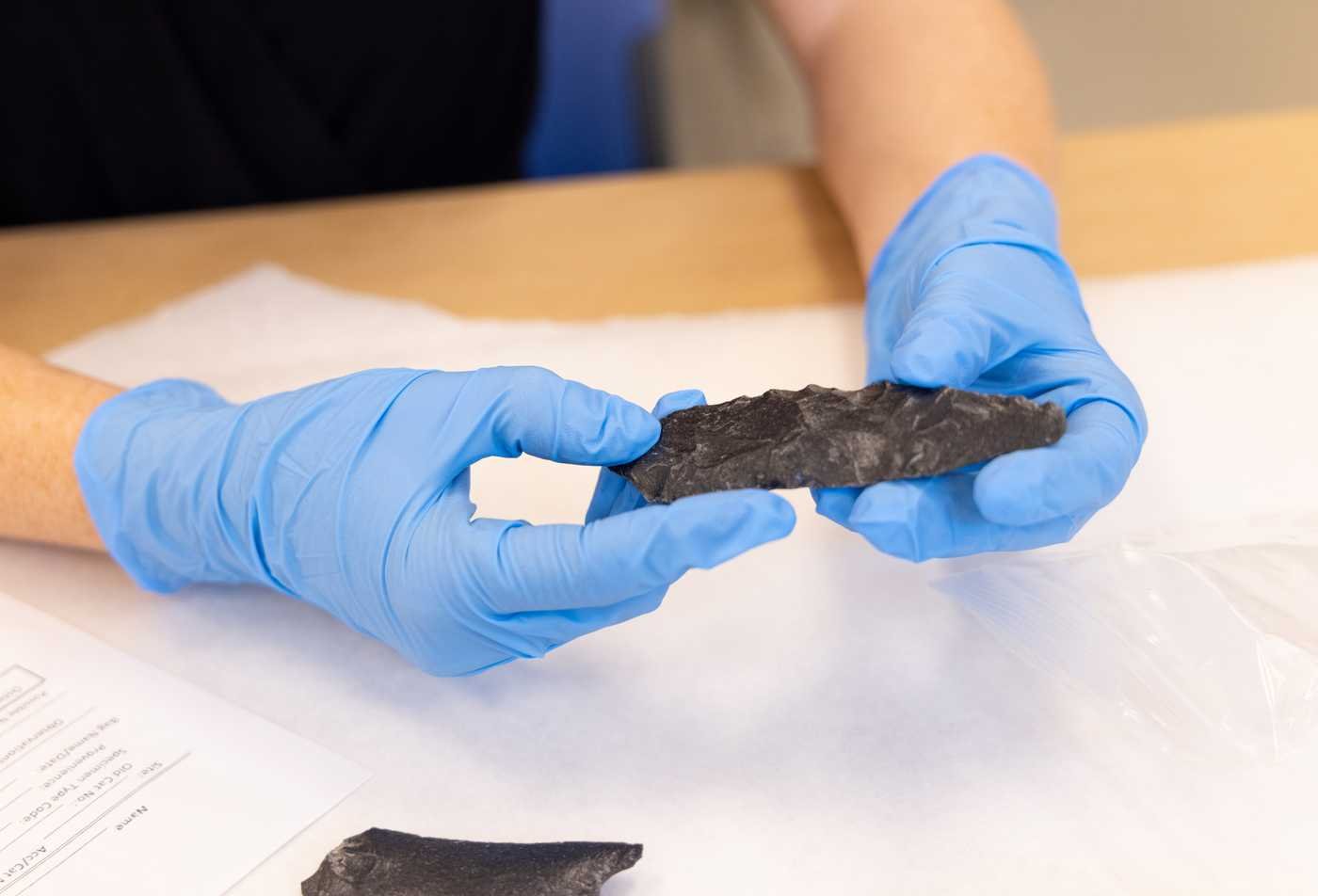
The ability to steward and care for cultural collections is a critical part of the preservation and proliferation of human culture. This program equips you with the knowledge and skills to appropriately care for and represent cultural collections in a museum, repository or other cultural or professional setting.
Quick facts

Locations


Credits
Additional facts
STEM-OPT extension eligible: No
International students (F1), this program is not eligible for the STEM-OPT extension.
Accreditation
Accredited by the Higher Learning Commission.


Degree description
The Master of Arts program in museum studies informs and trains you in the ethical and legal considerations around collections care, cultural resource compliance, and collaboration with descendant communities as stakeholders in museum collections.
You develop theoretical questions and applied skills that engage the functions, practices and critical analyses of museums. You also gain practical experience while being encouraged to challenge preconceived notions about museums and the way museums affect and are affected by societies and cultures.
Designed to be interdisciplinary, inclusive and representative, the program ensures that you understand the meaning and significance of museums in contemporary society and prepares you for diverse museum careers.
Curriculum
This graduate degree includes courses focused on a specialized topic, so you can advance your skills for further professional opportunities. Explore all courses below:
30 credit hours including the required applied project course (ASB 593)
Required Core (3 credit hours) Other Requirements (9 or 10 credit hours) Electives (14 or 15 credit hours) Culminating Experience (3 credit hours) Additional Curriculum Information Internship (ASB 584) and Practicum (ASB 580) must be approved by the faculty advisor. Credits for other requirements (nine or 10 credits) and electives (14 or 15 credits) vary and depend on whether ASB 555 (four credits) is completed as an option under other requirements.
ASB 573 Museum Administration (3)
ASB 584 Internship (6)
ASB 579 Critical Issues Museum Studies (3) or ASB 591 Topic: Cultural Resource Compliance and Consultation (3) or ASM 555 Advanced Human Osteology (4)
ASB 593 Applied Project (3)
For a complete list of approved elective and research courses, students should contact the school.




What you'll learn
The following learning outcomes highlight some of the knowledge and skills you'll develop to support your future success.
- Operate using the standards of professional practices and ethics during their applied internship in a museum or federal agency setting.
- Address the constraints in decision-making, particularly as they pertain to the ethical and legal challenges that museums face.
- Articulate strategies to address ethical and legal challenges confronting museum and cultural settings.
 Operate using the standards of professional practices and ethics during their applied internship in a museum or federal agency setting.
Admission requirements
Here are the admission and application details
All students are required to meet general university admission requirements.
U.S. applicants (opens in new window) | International applicants (opens in new window) | English proficiency (opens in new window)
Applicants must fulfill the requirements of both the Graduate College and The College of Liberal Arts and Sciences. Applicants are eligible to apply to the program if they have earned a bachelor's or master's degree from a regionally accredited institution. Suitable backgrounds for admission include disciplines related to museum studies, anthropology, history or art (fine art or art history). Applicants must have a minimum cumulative GPA of 3.00 (scale is 4.00 = "A") in the last 60 hours of their first bachelor's degree program or a minimum cumulative GPA of 3.00 (scale is 4.00 = "A") in an applicable master's degree program. All applicants must submit: Additional Application Information
An applicant whose native language is not English must provide proof of English proficiency regardless of their current residency.
Application deadlines
| Session | Modality | Deadline | Type |
|---|---|---|---|
| Session A/C | In Person | 12/01 | Final* |
*A final deadline means that all applications and application materials must be received by Admission Services by the deadline date. Applications that are incomplete may not be considered after the final deadline. Applications that are submitted past the final deadline may not be considered.


Paying for college
Use our calculator to estimate your full-time or part-time tuition fees for this program prior to any financial aid. Keep in mind that most of our students receive financial aid, which can reduce out-of-pocket costs.
Get an estimateCareer opportunities
The demand in the job market for people with the skill set to manage cultural collections and community engaged stewardship is strong. There is a growing need for researchers and practitioners with knowledge and skills who can manage, evaluate and identify cultural materials for long-term care, repatriation and interpretation.
Graduates may also become leaders in their field, spending their time consulting for private and public organizations, directing nonprofit organizations, or directing programs in the private or public sector.
Some career opportunities include:
- museum collections manager
- museum site director
- NAGPRA repatriation specialist


Contact information
Use the contact information below to get in touch if you're a current student or have general questions.
Prospective students should fill out the Request for Information form.
School of Human Evolution & Social Change
|
SHESC 233
shesc.grad@asu.edu
480-965-6215
Admission deadlines
Frequently asked questions about degree programs
Accelerated programs allow students the opportunity to expedite the completion of their degree.
Accelerated master's
These programs allow students to accelerate their studies to earn a bachelor's plus a master's degree in as few as five years (for some programs).
Each program has requirements students must meet to be eligible for consideration. Students typically receive approval to pursue the accelerated master's during the junior year of their bachelor's degree program. Interested students can learn about eligibility requirements and how to apply.
Concurrent degrees allow students to pursue their own personal or professional interests, earn two distinct degrees and receive two diplomas. To add a concurrent degree to your existing degree, work with your academic advisor.
Joint programs, or jointly conferred degrees, are offered by more than one college and provide opportunities for students to take advantage of the academic strengths of two academic units. Upon graduation, students are awarded one degree and one diploma conferred by two colleges.
ASU adds new programs to Degree Search frequently. Come back often and look for the "New Programs" option.
ASU Online offers programs in an entirely online format with multiple enrollment sessions throughout the year. See https://asuonline.asu.edu/ for more information.
The Western Regional Graduate Program (WRGP) provides a reduced tuition rate to non-resident graduate students who qualify. Visit the WRGP/WICHE webpage for more information: https://graduate.asu.edu/wiche.
