

Speech and Hearing Science (Auditory and Language Neuroscience), PhD
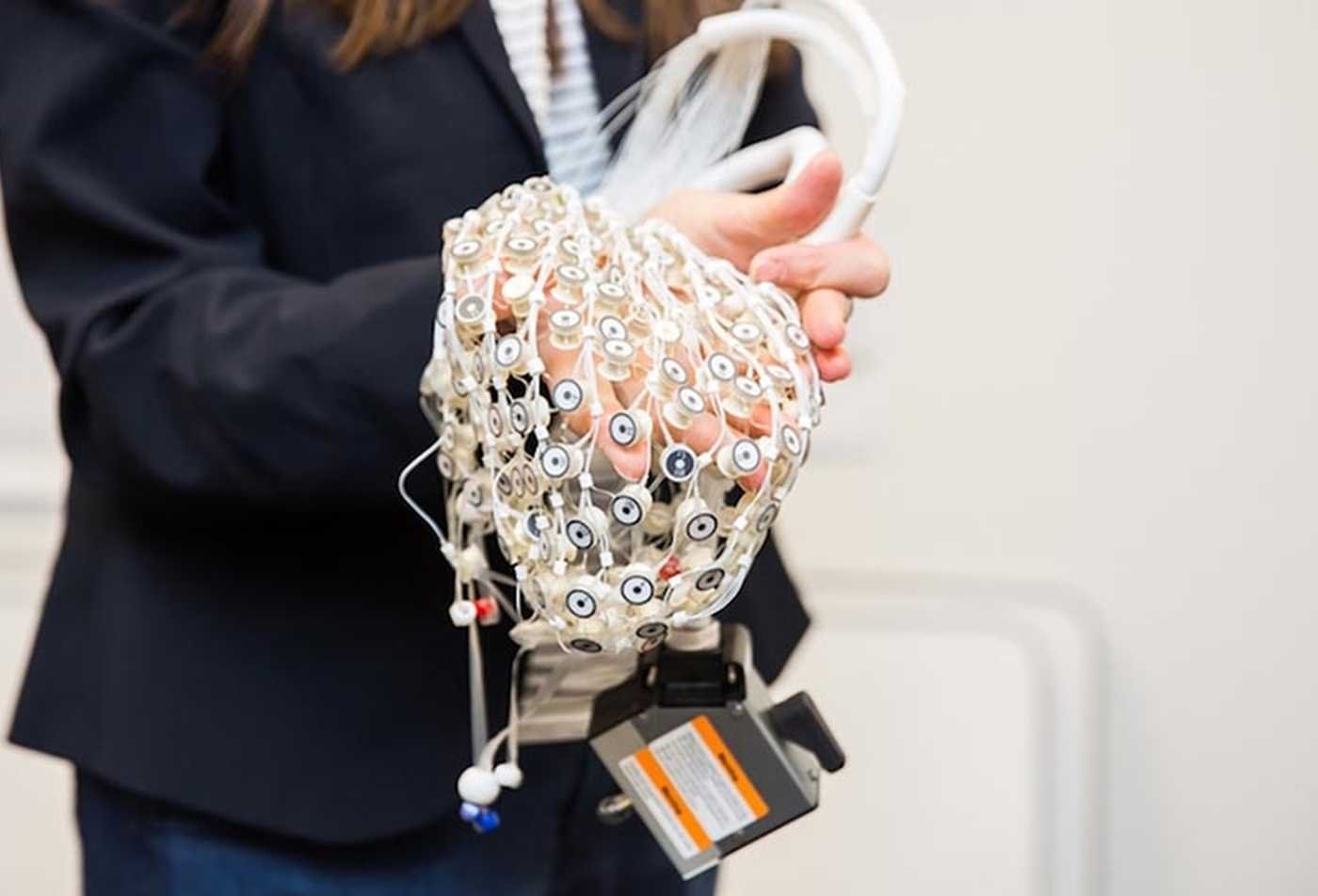
Language is a complex and uniquely human brain function. Learn innovative techniques, such as neuroimaging and electrophysiology, and make your own discoveries regarding how the brain processes language and sound.
Quick facts

Locations


Credits
Additional facts
STEM-OPT extension eligible: Yes
International students (F1) can extend U.S. work experience by 24 months.
Accreditation
Accredited by the Higher Learning Commission.


Speech and Hearing Science, PhD degree description
In the Doctor of Philosophy program in speech and hearing science with a concentration in auditory and language neuroscience, you develop a strong foundation in basic and applied neuroscience, conduct impactful research related to healthy auditory and language abilities, and explore the neural bases of communication disorders. This program's expert faculty are in a distinct position to provide an integrated training experience because of their focus on innovative, next-generation approaches to the field of speech, language and hearing science, such as neuroimaging techniques and neuromodulation.
Faculty backgrounds include engineering, neuroscience and psychology. Within ASU, rich collaborations exist between the College of Health Solutions, the School of Life Sciences, the Ira A. Fulton Schools of Engineering, the Biodesign Institute and the Department of Psychology, enabling you to take advantage of faculty mastery in each area. ASU maintains strong research and clinical relationships with Barrow Neurological Institute, Mayo Clinic and Banner Alzheimer's Institute, supporting faculty expertise in speech-language pathology and auditory neural prosthetics.
Why specialize in auditory and language neuroscience at ASU?
As one of the nation's leading public research universities, ASU connects you to a highly collaborative research ecosystem. Within it, you can publish your findings, present your work at conferences, and sharpen the competitive grant-writing skills that fuel a research career.
Curriculum
This graduate degree includes courses focused on a specialized topic, so you can advance your skills for further professional opportunities. Explore all courses below:
84 credit hours, a written comprehensive exam, an oral comprehensive exam, a prospectus and a dissertation
Required Core (2 credit hours) Concentration (6 credit hours) Other Requirements (12 credit hours) Restricted Elective (3 credit hours) Electives or Additional Research (28 credit hours) Research (21 credit hours) Culminating Experience (12 credit hours) Additional Curriculum Information In collaboration with faculty, students select an elective from a restricted list that focuses on issues related to auditory and language neuroscience, particularly the molecular, structural and anatomical aspects. The preliminary exam research project must be within the field of auditory or language neuroscience. This formal research experience during the first three semesters of the program provides students with a jump start into research, preparing them for their subsequent dissertation research. Before beginning dissertation research, the student must pass written and oral comprehensive examinations covering their field of study.
SHS 701 Scientific Writing and Presentation in Communication Sciences and Disorders I (1)
SHS 702 Scientific Writing and Presentation in Communication Sciences and Disorders II (1)
SHS 513 Auditory Neuroscience (3)
SHS 598 Topic: Speech Neuroscience (3)
SHS 598 Topic: Language and Communication Neuroscience (3)
professional seminars (12)
preliminary exam (0)
comprehensive exams (0)
SHS 792 Research (12)
research methods and statistics (9)
SHS 799 Dissertation (12)
Students entering the doctoral program with a master's degree in a related discipline may count up to 28 credit hours from the master's degree toward the total credit hours for this degree, with program approval.







What you'll learn
The following learning outcomes highlight some of the knowledge and skills you'll develop to support your future success.
- Students completing the Doctor of Philosophy in speech and hearing science with a concentration in auditory and language neuroscience will be able to develop curriculum and instruct in key knowledge areas within the fields of auditory and language neuroscience.
- Students completing the Doctor of Philosophy in speech and hearing science with a concentration in auditory and language neuroscience will engage with scholars in academic and professional settings.
- Students completing the Doctor of Philosophy in speech and hearing science with a concentration in auditory and language neuroscience will master the key concepts related to research in the field at an advanced level.
 Students completing the Doctor of Philosophy in speech and hearing science with a concentration in auditory and language neuroscience will be able to develop curriculum and instruct in key knowledge areas within the fields of auditory and language neuroscience.
Admission requirements
Here are the admission and application details
All students are required to meet general university admission requirements.
U.S. applicants (opens in new window) | International applicants (opens in new window) | English proficiency (opens in new window)
Applicants must fulfill the requirements of both the Graduate College and the College of Health Solutions. Applicants are eligible to apply to the program if they have earned a bachelor's degree in a related field and do not wish to earn a clinical master's degree, or if they have earned a master's degree or equivalent in speech and hearing science, psychology, linguistics or a related discipline from a regionally accredited institution. Applicants must have a minimum cumulative GPA of 3.00 (scale is 4.00 = "A") in the last 60 hours of their first bachelor's degree program or a minimum cumulative GPA of 3.00 (scale is 4.00 = "A") in an applicable master's degree program. All applicants must submit: Additional Application Information The personal statement, typically one to two double-spaced pages, should address the student's motivation to pursue the PhD, include evidence of potential to succeed in a research-intensive doctoral program, and describe goals for the future. Examples of evidence of potential to succeed include technical skills, clinical experiences, and research achievements and interests. The statement should also identify a specific faculty member with whom the student would like to work. An optional writing sample (six to 10 pages) may be submitted with the program application. Writing samples include publications, research manuscripts or a piece of academic writing. Contact information for three references is required. References are contacted via email to submit a letter of recommendation and respond to a series of questions about the applicant. References should be individuals who can speak to at least one of the following: the applicant's academic performance, clinical performance or potential to succeed in a research-intensive doctoral program. References are typically faculty members or clinical or research supervisors. If the applicant has spent some time away from a research or academic environment, it is still recommended that they include references from those previous experiences, in addition to a more recent clinical or research supervisor.
An applicant whose native language is not English must provide proof of English proficiency regardless of their current residency.
Application deadlines
| Session | Modality | Deadline | Type |
|---|---|---|---|
| Session A/C | In Person | 12/01 | Priority* |
*A priority deadline means that applications submitted and completed before the priority deadline will receive priority consideration. Applications submitted after the priority deadlines will be reviewed in the order in which they were completed and on a space-available basis. An application is complete after all materials are received by Admission Services.


Paying for college
Use our calculator to estimate your full-time or part-time tuition fees for this program prior to any financial aid. Keep in mind that most of our students receive financial aid, which can reduce out-of-pocket costs.
Get an estimateCareer opportunities
Careers this auditory and language neuroscience concentration prepares you for
Doctoral-level scientists in the field of speech and hearing science are well situated to pursue opportunities in which they can lead independent research programs as university professors or research scientists in the private or public sector.
There is a particular need for doctorate-prepared individuals with speech-language pathology or audiology backgrounds in tenure-track academic positions.
Career examples include:
- medical science liaison
- professor or community college teaching faculty
- program officer in a nonprofit or government agency
- research scientist in a for-profit or nonprofit entity


Contact information
Use the contact information below to get in touch if you're a current student or have general questions.
Prospective students should fill out the Request for Information form.
School of Clinical Health Sciences
|
HLTHN 401AA
chsgrad@asu.edu
602-496-3300
Admission deadlines
Frequently asked questions about degree programs
Accelerated programs allow students the opportunity to expedite the completion of their degree.
Accelerated master's
These programs allow students to accelerate their studies to earn a bachelor's plus a master's degree in as few as five years (for some programs).
Each program has requirements students must meet to be eligible for consideration. Students typically receive approval to pursue the accelerated master's during the junior year of their bachelor's degree program. Interested students can learn about eligibility requirements and how to apply.
Concurrent degrees allow students to pursue their own personal or professional interests, earn two distinct degrees and receive two diplomas. To add a concurrent degree to your existing degree, work with your academic advisor.
Joint programs, or jointly conferred degrees, are offered by more than one college and provide opportunities for students to take advantage of the academic strengths of two academic units. Upon graduation, students are awarded one degree and one diploma conferred by two colleges.
ASU adds new programs to Degree Search frequently. Come back often and look for the "New Programs" option.
ASU Online offers programs in an entirely online format with multiple enrollment sessions throughout the year. See https://asuonline.asu.edu/ for more information.
The Western Regional Graduate Program (WRGP) provides a reduced tuition rate to non-resident graduate students who qualify. Visit the WRGP/WICHE webpage for more information: https://graduate.asu.edu/wiche.
