

Advanced Nursing Practice (Acute Care Pediatric Nurse Practitioner), DNP
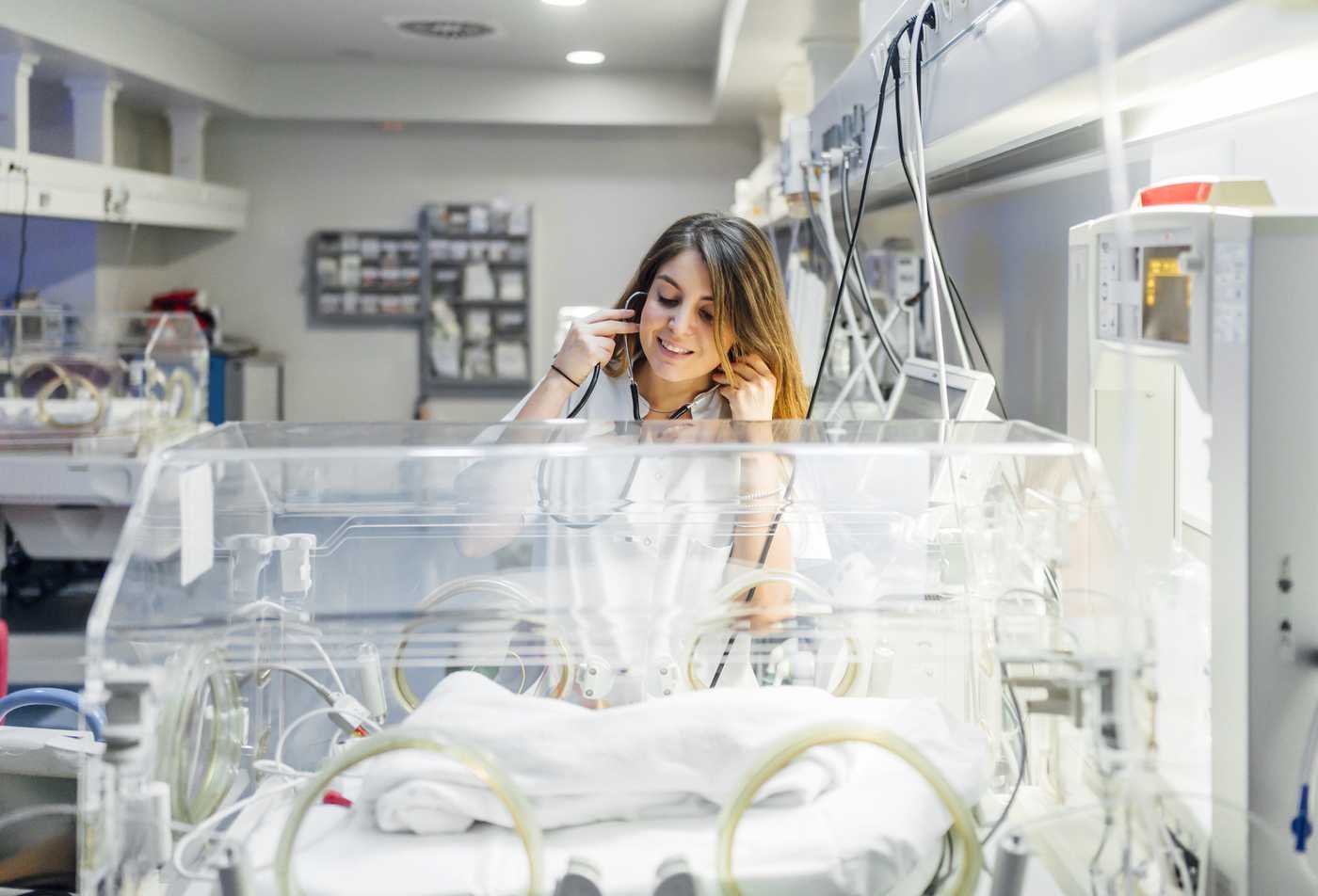
Gain the clinical expertise needed to care for seriously ill children with confidence and compassion. Learn from experienced, practicing faculty and gain hands-on clinical experience to address complex medical situations, deliver critical interventions and provide support to families.
Quick facts

Locations


Credits
Additional facts
STEM-OPT extension eligible: No
International students (F1), this program is not eligible for the STEM-OPT extension.
Accreditation and professional licensure
The DNP in Advanced Nursing Practice (Acute Care Pediatric Nurse Pract...
Accredited by the Higher Learning Commission.


Program description
The acute care pediatric nurse practitioner concentration of the Doctor of Nursing Practice program is an advanced nursing practice degree. This program prepares you to provide holistic, client-centered care to meet the physical, psychological and social needs of infants, children, adolescents and young adults.
All programs are offered in a flexible format requiring you to travel to an ASU campus for up to one week for orientation at the beginning of the program and two to three times per semester.
Core courses include pharmacology, advanced pathophysiology and advanced health assessment. Specialty courses focus on assessment and management of a supportive, family-centered, culturally appropriate plan of care for pediatric patients with chronic, complex acute and life-threatening illnesses. Any additional coursework determined by your unique gap analysis must have been completed within the past five years to be eligible for credit.
In addition to advanced nursing specialty-focused outcomes, the DNP program engages you to meet doctoral-level competencies in systems-level thinking, complexity science, quality and safety, evidence-based practice and the development of a doctoral project within a partner organization to improve outcomes at the patient, provider or health care system level. You are educated as a leader at the highest level of nursing practice to translate research into practice, lead in multidisciplinary teams, and engage in health care policy and advocacy to improve patient outcomes.
Focused clinical experiences are arranged for you if you're residing in Maricopa County, Arizona. You should expect to travel throughout Maricopa County and, in some cases, throughout Arizona to complete your assigned clinical placement.
If you're residing outside of Maricopa County, you're responsible for identifying the required number of clinical sites in your area of residence and for identifying preceptors and sites willing to accommodate clinical rotations. Edson College of Nursing and Health Innovation must approve these sites before you start any clinical experience; the DNP program office does not guarantee a clinical placement site if you are outside Maricopa County. If, during the program, faculty determine that you need additional supervision for clinical progress in the program, you must complete clinical experiences in the Phoenix area.
The program offers clinical rotations in health profession shortage areas throughout the state, in both urban underserved and rural areas, which provide you with multicultural experiences to enhance professional development.
As a participating National Council for State Authorization Reciprocity Agreements member, Arizona State University is authorized to offer distance education to persons located in individual State Authorization Reciprocity Agreement member states in accordance with the council's established policies and standards. California is not a State Authorization Reciprocity Agreement member, and the California Bureau of Private Postsecondary Education does not regulate out-of-state public institutions offering online and in-person education from Arizona. ASU may offer educational activities in California. There are some exceptions for specific programs at Edson College of Nursing and Health Innovation; these are noted on the ASU state authorizations website.
Why specialize in acute care pediatric nurse practitioner at ASU?
At ASU's Edson College of Nursing and Health Innovation, you join a nationally ranked DNP program housed at the nation's most innovative university. That pairing shapes an education built to prepare you as a nurse practitioner to lead the future of health care, not simply practice within it.
You will benefit from flexible learning curriculum, learning from nationally recognized faculty, and participating in diverse clinical experiences across one of the country's largest metropolitan health care systems. Supervised clinical practicums allow you to complete the required hundreds of hours of hands-on patient care in settings such as primary care clinics, hospitals, specialty practices, urgent care centers, community health centers and telehealth services, all under the guidance of experienced nurse practitioners and physicians.
Curriculum
This graduate degree includes courses focused on a specialized topic, so you can advance your skills for further professional opportunities. Explore all courses below:
85 credit hours including the required applied project course (DNP 707)
Required Core (13 credit hours) Concentration (26 credit hours) Other Requirements (40 credit hours) Electives (3 credit hours) Culminating Experience (3 credit hours) Additional Curriculum Information The American Association of Colleges of Nursing has recommended a minimum of 1,000 postbaccalaureate practicum hours for all students completing a DNP program. This program includes 1,170 practicum hours, exceeding the AACN requirement. Nurses must complete 600 hours of direct patient care with a nurse practitioner or physician preceptor in the clinical setting. Documented clinical experiences are required by the Pediatric Nursing Certification Board for the graduate to be eligible to take the national pediatric nurse practitioner acute care certification examination. For electives or research, students should see the academic unit for the approved course list. Other coursework may be used with the approval of the academic unit. When approved by the student's supervisory committee and the Graduate College, up to 30 credit hours from a previously awarded master's degree can be used for this program. Other requirement coursework may be substituted with approval of the academic unit if the student is in an approved concurrent program.
DNP 704 Principles of Evidence-based Care in Advanced Practice (4)
DNP 705 Health Care Outcome Management (3)
DNP 708 Systems Thinking in a Complex Healthcare Environment (3)
DNP 709 Individual and Innovation Leadership in Healthcare Practice (3)
DNP 606 Principles of Pediatric Acute Care I (3)
DNP 607 Advanced Pediatric Acute Care Practicum I (6)
DNP 619 Principles of Pediatric Acute Care II (3)
DNP 620 Advanced Pediatric Acute Care Practicum II (6)
DNP 643 Developmentally Based Care of the Well Child (3)
DNP 644 Well Child Advanced Practicum (2)
DNP 649 Advanced Physiology (3)
DNP 601 Theoretical Foundations for Advance Practice Nursing (3)
DNP 602 Evaluating Research for Practice (3)
DNP 604 Advanced Human Pathophysiology Across Lifespan (4)
DNP 605 Advanced Health Assessment Across Lifespan (3)
DNP 608 Applied Pharmacotherapeutics Across Lifespan (3)
DNP 609 Advanced Practice Nursing Role (1)
DNP 679 Biostatistics: Principles of Statistical Inference (3)
DNP 703 Innovation in Communication-scholarly and Professional Writing (2)
DNP 711 Healthcare Policy and Innovation (3)
DNP 712 Clinical Residency and Management (12)
DNP 715 Dynamics and Principles of Information in Health Care (3)
DNP 707 Disseminating Evidence to Advance Best Practice in Health Care and Health Policy (3)
Completion of an evidence-based doctoral applied project focused on a clinical issue relevant to advanced practice nursing is required.







What you'll learn
The following learning outcomes highlight some of the knowledge and skills you'll develop to support your future success.
- Develop strategies to influence organizational culture toward innovative evidence-based practice models.
- Develop nursing practice recommendations using evidence based rationales.
- Integrate evidence-based guidelines to support advanced clinical judgment in the assessment, diagnosis, and management of critical and unstable health conditions in acute care pediatric populations.
- Synthesize evidence-based guidelines to support advanced clinical judgment in the assessment, diagnosis, and management of complex and chronic health conditions in acute care pediatric populations.
 Develop strategies to influence organizational culture toward innovative evidence-based practice models.
Admission requirements
Here are the admission and application details
All students are required to meet general university admission requirements.
U.S. applicants (opens in new window) | International applicants (opens in new window) | English proficiency (opens in new window)
Applicants must fulfill the requirements of both the Graduate College and the Edson College of Nursing and Health Innovation. Applicants must have earned a bachelor's or master's degree in nursing from a regionally accredited institution. Applicants must have a minimum cumulative GPA of 3.00 (scale is 4.00 = "A") in the last 60 hours of their first bachelor's degree program or a minimum cumulative GPA of 3.00 (scale is 4.00 = "A") in an applicable master's degree program. All applicants must submit: Additional Application Information A current unencumbered RN license in the state in which the student plans to do clinical practicums is required. All students are also required to have an unencumbered Arizona RN license or an unencumbered compact state RN license as mandated by the Arizona State Board of Nursing. The RN license must remain unencumbered throughout enrollment in any nursing program. One year of clinical experience working within the specialty population is preferred. Applicants offered admission must meet health and safety requirements, which include a passing disposition on a background clearance, satisfactory completion of a substance screen, and required health and safety documents. Students offered admission must complete health and safety requirements by the provided deadlines or their offer of admission is withdrawn. An interview with program faculty is required. An admission examination is not required. Applicants requesting review of previously completed courses must have a gap analysis review. Applicants must submit primary source documents (i.e., syllabi) for faculty review to demonstrate advanced physiology or pathophysiology, advanced health assessment, advanced pharmacology, and advanced role courses. Depending on the courses completed in the master's degree program, additional courses may be required to complete this specialty. Courses must have been completed within the past five years to be eligible or actively board certified and practicing. Applications are reviewed on a space-available basis after the priority deadline.
An applicant whose native language is not English must provide proof of English proficiency regardless of their current residency.
Application deadlines
| Session | Modality | Deadline | Type |
|---|---|---|---|
| Session A/C | In Person | 12/15 | Priority* |
*A priority deadline means that applications submitted and completed before the priority deadline will receive priority consideration. Applications submitted after the priority deadlines will be reviewed in the order in which they were completed and on a space-available basis. An application is complete after all materials are received by Admission Services.


Paying for college
Use our calculator to estimate your full-time or part-time tuition fees for this program prior to any financial aid. Keep in mind that most of our students receive financial aid, which can reduce out-of-pocket costs.
Get an estimateCareer opportunities
Careers this acute care pediatric nurse practitioner concentration prepares you for
Graduates are prepared to excel upon entering the workplace and to practice at the most advanced level of nursing.
The acute care pediatric nurse practitioner role has grown exponentially in the past decade, and the demand for board-certified advanced practice acute care providers has never been higher. Graduates are prepared to provide health care for newborns and children up to young adulthood in careers that include:
- acute care home services
- critical care provision
- education and training of future health care providers
- emergency care provision
- inpatient hospitalist services
- specialty service provision
- transport teams


Contact information
Use the contact information below to get in touch if you're a current student or have general questions.
Prospective students should fill out the Request for Information form.
Edson College of Nursing and Health Innovation
|
HLTHN 301
nursingandhealth@asu.edu
602-496-0937
Frequently asked questions about degree programs
Accelerated programs allow students the opportunity to expedite the completion of their degree.
Accelerated master's
These programs allow students to accelerate their studies to earn a bachelor's plus a master's degree in as few as five years (for some programs).
Each program has requirements students must meet to be eligible for consideration. Students typically receive approval to pursue the accelerated master's during the junior year of their bachelor's degree program. Interested students can learn about eligibility requirements and how to apply.
Concurrent degrees allow students to pursue their own personal or professional interests, earn two distinct degrees and receive two diplomas. To add a concurrent degree to your existing degree, work with your academic advisor.
Joint programs, or jointly conferred degrees, are offered by more than one college and provide opportunities for students to take advantage of the academic strengths of two academic units. Upon graduation, students are awarded one degree and one diploma conferred by two colleges.
ASU adds new programs to Degree Search frequently. Come back often and look for the "New Programs" option.
ASU Online offers programs in an entirely online format with multiple enrollment sessions throughout the year. See https://asuonline.asu.edu/ for more information.
The Western Regional Graduate Program (WRGP) provides a reduced tuition rate to non-resident graduate students who qualify. Visit the WRGP/WICHE webpage for more information: https://graduate.asu.edu/wiche.
