

Law Enforcement in Parks and Protected Areas, Certificate
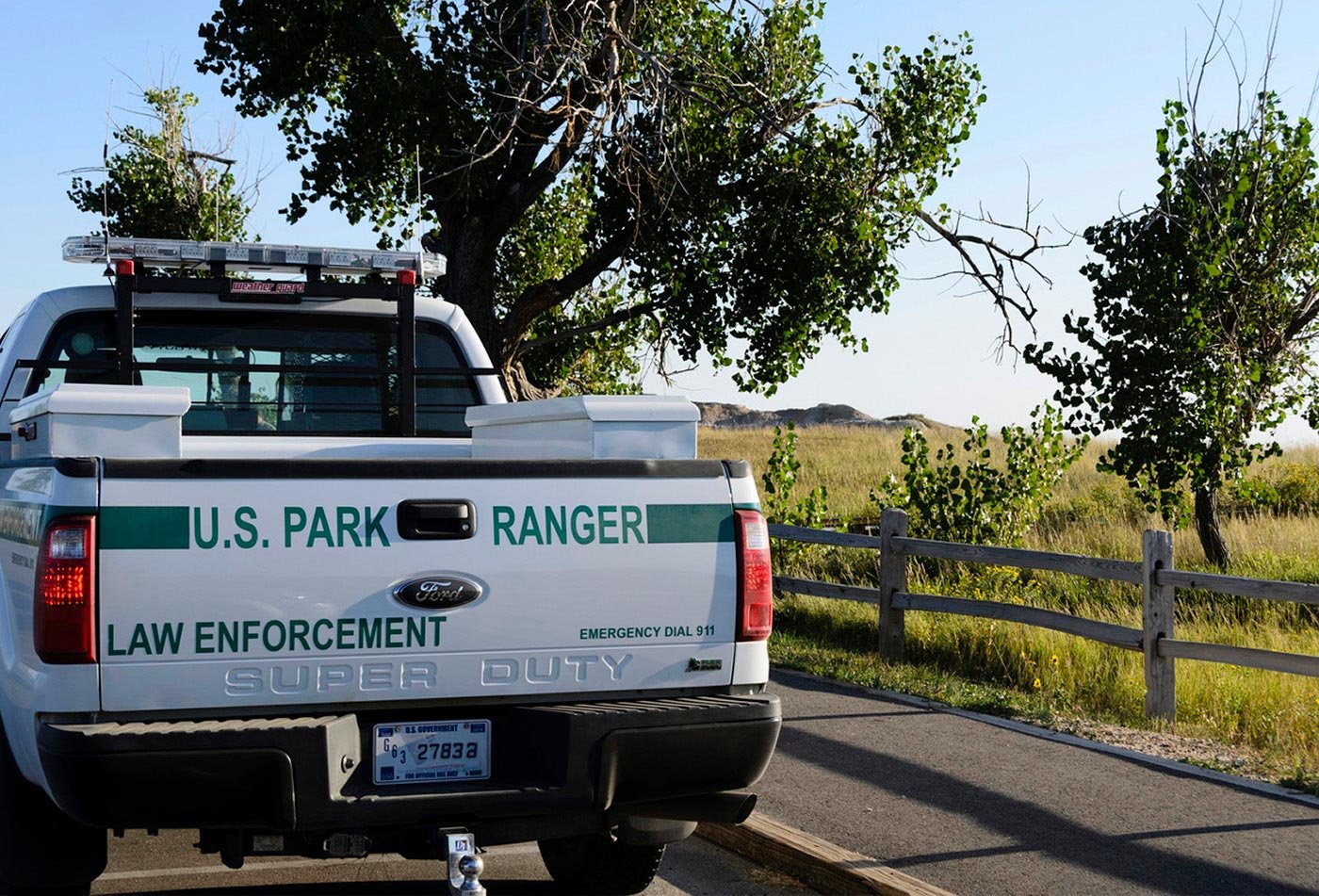
Explore how to protect both people and natural resources through this undergraduate certificate. You'll learn to navigate the legal and jurisdictional challenges of managing protected lands and prepare for roles like park ranger or conservation officer.
Quick facts

Locations


Credits
Additional facts
Accreditation
Accredited by the Higher Learning Commission.


Certificate description
Law Enforcement in Parks and Protected Areas certificate program description
In the certificate program in law enforcement in parks and protected areas, you explore how public lands and natural resources are managed and protected through law enforcement and policy in the certificate program in law enforcement in parks and protected areas. Coursework examines the relationship between society and the environment, and the legal and ethical challenges involved in safeguarding parks and protected areas, especially those near cities in the Southwest.
The curriculum draws from both a nationally accredited parks and recreation program and a recognized criminology and criminal justice program. You gain knowledge in law enforcement, resource management and environmental protection, preparing you to address crime prevention, visitor safety and conservation across park and recreation settings.
Why earn a law enforcement in parks and protected areas undergraduate certificate at ASU?
This undergraduate certificate sits within the School of Community Resources and Development, giving you a multidisciplinary path that connects tourism and recreation expertise with the public safety resources of the Watts College of Public Service and Community Solutions.
This grounding in environmental law and policy supports work with federal, state and local land management agencies.
Courses
This undergraduate certificate includes courses focused on a specialized topic, so you can advance your skills for further professional opportunities. Explore all courses below:
2026-2027 Catalog Year
The certificate requires 15 credit hours. A "C" minimum is required for all courses in the certificate, although students must maintain a 3.00 GPA in the post-baccalaureate certificate program.
| Requirement | Minimum grade | Credit hours |
|---|---|---|
|
The certificate requires 15 credit hours of graded classroom coursework (no internship, no independent study), of which 12 are upper divison. Students complete 12 credit hours of required core courses and a three credit hour elective. A grade of "C" grade (2.00 on a 4.00 scale) or better is required for all courses in the certificate. Courses taken as part of a university major may count toward that degree and the certificate. |
||
|
CRJ 230 Introduction to Policing
3 credit hours
Minimum
grade:C
|
C | 3 |
|
CRJ 410 Criminal Procedure I: The Law of Investigations
3 credit hours
Minimum
grade:C
|
C | 3 |
|
PRM 370 Public Lands Management
3 credit hours
Minimum
grade:C
|
C | 3 |
|
PRM 380 Wilderness and Parks in America
(SUST)
3 credit hours
Minimum
grade:C
|
C | 3 |
|
CRJ 315 Police Organization and Management
or
PRM 340 Outdoor Survival
or
PRM 360 Environmental and Cultural Interpretation
3 credit hours
Minimum
grade:C
|
C | 3 |
|
Prerequisite courses may be needed in order to complete the requirements of this certificate.
|


What you'll learn
The following learning outcomes highlight some of the knowledge and skills you'll develop to support your future success.
- Demonstrate an understanding of the ethical standards implicit in law enforcement in parks and protected areas.
- Apply critical thinking skills by taking into account the complexities of an issue and acknowledging other viewpoints.
 Demonstrate an understanding of the ethical standards implicit in law enforcement in parks and protected areas.
Enrollment requirements
A GPA of 2.00 is required to add this certificate.
A student pursuing an undergraduate certificate must be enrolled as a degree-seeking student at ASU. Undergraduate certificates are not awarded before the completion of an undergraduate degree. A student who already holds an undergraduate degree may pursue an undergraduate certificate as a nondegree-seeking graduate student.
Here are the admission and application details


Paying for college
Use our calculator to estimate your full-time or part-time tuition fees for this program prior to any financial aid. Keep in mind that most of our students receive financial aid, which can reduce out-of-pocket costs.
Get an estimateCareer opportunities
Careers this law enforcement in parks and protected areas undergraduate certificate prepares you for
Graduates are prepared for roles that combine natural resource protection and public safety. They may work with federal, state or local agencies, including park services, environmental and recreation departments, and conservation organizations.
Career paths include positions such as park ranger, recreation patrol officer, conservation enforcement aide, and visitor services specialist in public and private recreation settings.

Contact information
Use the contact information below to get in touch if you're a current student or have general questions.
School of Community Resources and Development
|
UCENT 164
scrdadvising@asu.edu
602-496-1658
Frequently asked questions about degree programs
Accelerated programs allow students the opportunity to expedite the completion of their degree.
Accelerated master's
These programs allow students to accelerate their studies to earn a bachelor's plus a master's degree in as few as five years (for some programs).
Each program has requirements students must meet to be eligible for consideration. Students typically receive approval to pursue the accelerated master's during the junior year of their bachelor's degree program. Interested students can learn about eligibility requirements and how to apply.
Concurrent degrees allow students to pursue their own personal or professional interests, earn two distinct degrees and receive two diplomas. To add a concurrent degree to your existing degree, work with your academic advisor.
Joint programs, or jointly conferred degrees, are offered by more than one college and provide opportunities for students to take advantage of the academic strengths of two academic units. Upon graduation, students are awarded one degree and one diploma conferred by two colleges.
ASU adds new programs to Degree Search frequently. Come back often and look for the "New Programs" option.
ASU Online offers programs in an entirely online format with multiple enrollment sessions throughout the year. See https://asuonline.asu.edu/ for more information.
