

Recreational Therapy, Minor
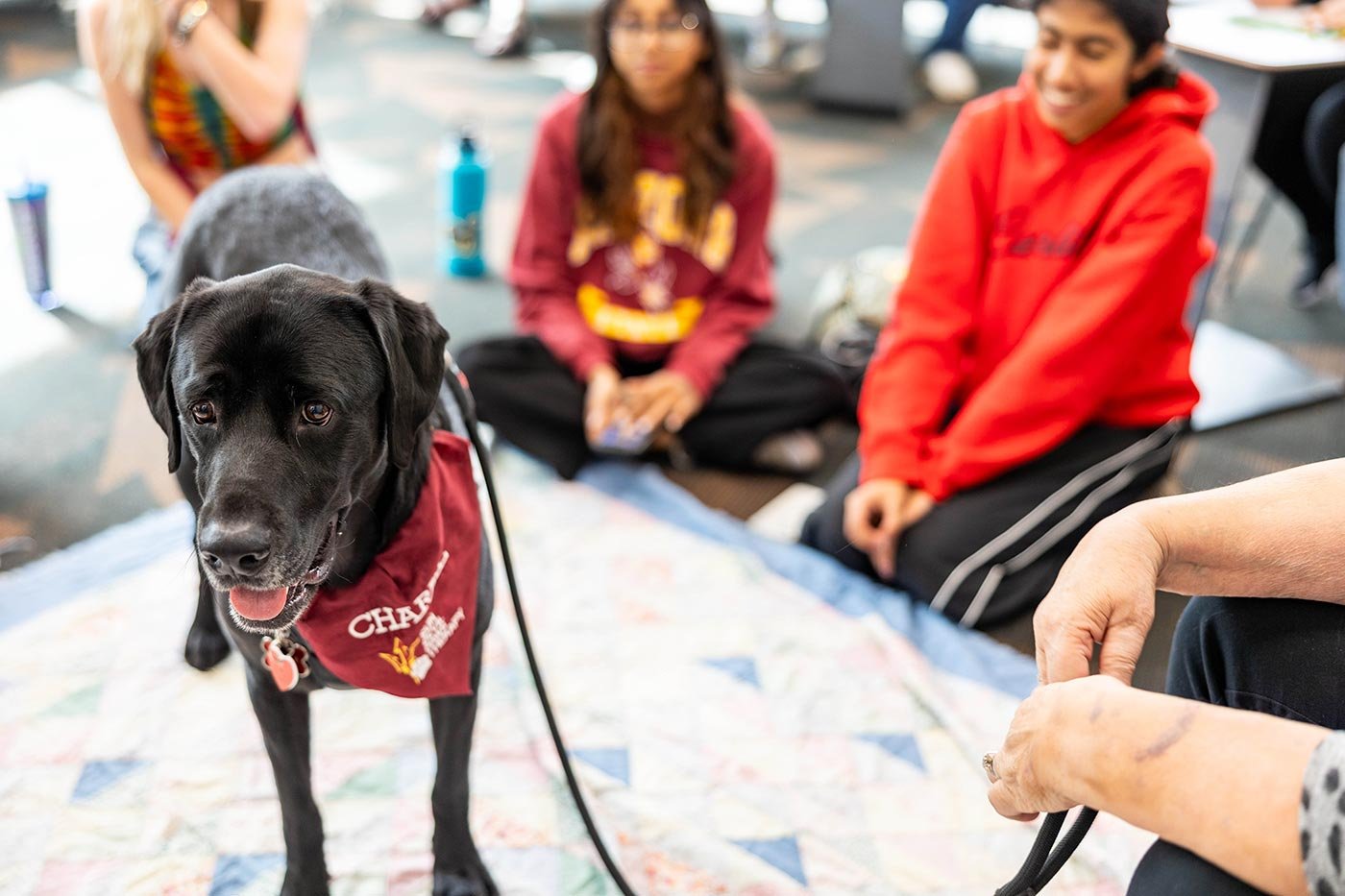
Discover the fundamentals of therapeutic recreation and develop the skills to facilitate activity-based interventions. This minor gives you a working foundation in the field along with the hands-on techniques you need to put those interventions into practice.
Quick facts

Locations


Credits
Additional facts
Accreditation
Accredited by the Higher Learning Commission.


Recreational Therapy minor description
In the minor program in recreational therapy, you learn to use recreation as a therapeutic tool to support the physical, emotional and social well-being of individuals and communities. Through a combination of coursework and applied experiences, you design, implement and evaluate recreation programs that promote health and quality of life. The minor complements majors such as integrative health; public health; social work; health sciences; psychology; education; and parks, recreation and sport management.
If you complete the minor, you fulfill part of the eligibility requirements to take the national certification exam through the National Council for Therapeutic Recreation Certification. https://nctrc.org/ctrs-the-qualified-provider/
Why earn a recreational therapy minor at ASU?
The curriculum keeps pace with a changing health care landscape, introducing emerging topics like assistive technologies and AI-integrated patient outcome tracking. This career-integrated learning is especially valuable if you're heading toward allied health, rehabilitation or community wellness work.
Courses
This undergraduate minor includes courses focused on a specialized topic, so you can advance your skills for further professional opportunities. Explore all courses below:
2026-2027 Catalog Year
| Requirement | Minimum grade | Credit hours |
|---|---|---|
|
The minor in recreational therapy requires completion of 18 credit hours: six credit hours of required courses and 12 credit hours of electives. Students seeking the national credential in therapeutic recreation should select electives from the Recreation Therapy Electives list.
|
||
| Required Courses | ||
|
RTH 364 Foundations in Recreational Therapy
(SOBE)
3 credit hours
Minimum
grade:C
|
C | 3 |
|
RTH 413 Leadership and Professional Development in Recreational Therapy
3 credit hours
Minimum
grade:C
|
C | 3 |
| Electives | ||
|
Choose 12 credit hours of elective courses. At least three credit hours must be upper division. For students seeking national credentialing through the National Council for Therapeutic Recreation (NCTRC), select four courses from the Recreational Therapy Electives list. Students interested in advancing knowledge in recreational therapy and do not intend to seek national credentialing through the National Council for Therapeutic Recreation (NCTRC) should select four courses between the two lists of courses: Recreational Therapy Electives and Other Electives. Minimum
grade:
|
||
|
These courses are not therapeutic recreation content courses and do not meet this coursework requirement for professional eligibility through the National Council for Therapeutic Recreation (NCTRC).
9 credit hours
Minimum
grade:C
|
C | 9 |
|
These courses are not therapeutic recreation content courses and do not meet this coursework requirement for professional eligibility through the National Council for Therapeutic Recreation (NCTRC).
3 credit hours
Minimum
grade:C
|
C | 3 |
|
Prerequisite courses may be needed in order to complete the requirements of this minor.
|




Enrollment requirements
GPA Requirement: 2.50
Incompatible Majors: BS in recreational therapy
Other Enrollment Requirements: none
Current ASU undergraduate students may pursue a minor and have it recognized on their ASU transcript at graduation. Minor requirements appear on the degree audit once the minor is added. Certain major and minor combinations may be deemed inappropriate by the college or department of either the major program or the minor. Courses taken for the minor may not count toward both the major and minor.
Here are the admission and application details


Paying for college
Use our calculator to estimate your full-time or part-time tuition fees for this program prior to any financial aid. Keep in mind that most of our students receive financial aid, which can reduce out-of-pocket costs.
Get an estimateCareer opportunities
Careers this recreational therapy minor prepares you for
Minor programs enable students to develop additional competencies that complement the marketable knowledge and skills they acquire in their majors. Graduates are positioned for impactful careers in health care, education, rehabilitation and community services. They can find opportunities in diverse settings, including hospitals, rehabilitation centers, schools, veteran services, behavioral and mental health programs, senior centers, and community and adaptive sports programs. They engage in meaningful work that enhances the quality of life for those they serve.


Contact information
Use the contact information below to get in touch if you're a current student or have general questions.
School of Community Resources and Development
|
UCENT 164
scrdadvising@asu.edu
602-496-1658
Frequently asked questions about degree programs
Accelerated programs allow students the opportunity to expedite the completion of their degree.
Accelerated master's
These programs allow students to accelerate their studies to earn a bachelor's plus a master's degree in as few as five years (for some programs).
Each program has requirements students must meet to be eligible for consideration. Students typically receive approval to pursue the accelerated master's during the junior year of their bachelor's degree program. Interested students can learn about eligibility requirements and how to apply.
Concurrent degrees allow students to pursue their own personal or professional interests, earn two distinct degrees and receive two diplomas. To add a concurrent degree to your existing degree, work with your academic advisor.
Joint programs, or jointly conferred degrees, are offered by more than one college and provide opportunities for students to take advantage of the academic strengths of two academic units. Upon graduation, students are awarded one degree and one diploma conferred by two colleges.
ASU adds new programs to Degree Search frequently. Come back often and look for the "New Programs" option.
ASU Online offers programs in an entirely online format with multiple enrollment sessions throughout the year. See https://asuonline.asu.edu/ for more information.
